Common Installation Mistakes with Ductile Iron Pipe
Installing ductile iron pipe correctly is essential for long service life, stable water flow, and reduced maintenance costs.
However, many on-site problems come from avoidable mistakes during handling, trench preparation, joint assembly, or backfilling.
For operators and installation teams, understanding these common errors can help prevent leaks, pipe damage, and unnecessary downtime.
This guide highlights practical installation issues to watch for and offers useful insights for safer, more reliable ductile iron pipe performance.
Why Small Installation Errors Become Big Pipe Problems
Ductile iron pipe is strong, durable, and widely used in water supply, wastewater, industrial, and municipal pipeline systems.
Even so, the pipe can only perform well when installation conditions support its design strength and joint sealing performance.
Most early failures are not caused by the pipe material itself, but by poor site control and rushed procedures.
Operators usually care most about leakage, joint movement, low flow efficiency, difficult repairs, and safety risks during operation.
That means installation teams should focus less on theory and more on preventing mistakes that create future maintenance pressure.
Mistake 1: Poor Handling Before the Pipe Reaches the Trench
One common mistake is treating ductile iron pipe as impossible to damage because it has high mechanical strength.
Dropping pipes, dragging spigot ends, or hitting cement mortar linings can create hidden defects before installation begins.
Operators should inspect each pipe for coating damage, lining cracks, deformed sockets, and contaminated joint surfaces before lowering.
Use proper lifting slings, avoid metal hooks on sealing areas, and keep pipes supported on stable wooden blocks.
If damaged coating is ignored, corrosion protection may be weakened, especially in aggressive soils or wet trench environments.
Mistake 2: Inadequate Trench Preparation and Bedding
The trench is not just an empty space for the pipe; it is part of the pipeline support system.
Uneven trench bottoms, sharp stones, frozen soil, and unstable bedding can concentrate stress on the pipe barrel.
A ductile iron pipe can tolerate external loads well, but poor support may still cause joint deflection or coating abrasion.
Operators should confirm trench depth, width, bedding material, and grade before placing pipe sections into position.
Soft spots should be removed and replaced with suitable compacted material to prevent settlement after the line is commissioned.
Good bedding keeps the pipe aligned, protects the exterior coating, and reduces the chance of later leakage.
Mistake 3: Ignoring Joint Cleanliness and Gasket Condition
Many leaks begin with a simple problem: dirt, stones, or debris left inside the socket groove.
Rubber sealing rings need clean, smooth contact surfaces to compress evenly and form a reliable watertight joint.
Before assembly, operators should clean the socket, spigot, gasket groove, and lubricant contact areas carefully.
Never install a twisted, cut, hardened, or oversized gasket, because small defects can become major sealing failures.
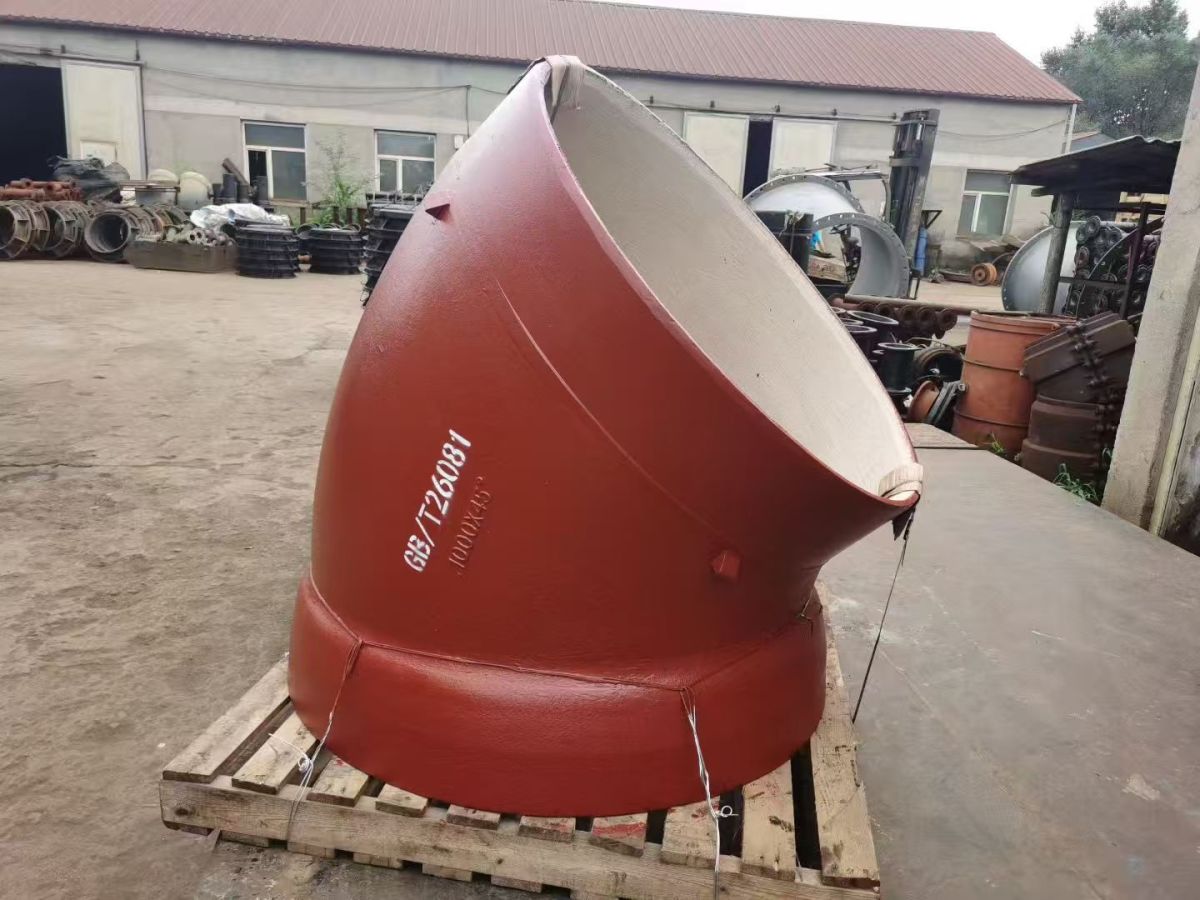
Shanxi Datong Foundry Co.,Ltd. manufactures ductile iron pipes, fittings, and rubber sealing rings with integrated casting capabilities.
Using compatible pipes, fittings, and sealing rings helps reduce dimensional mismatch and improves joint reliability during installation.
Mi
stake 4: Incorrect Lubrication and Joint Assembly
Another frequent mistake is using the wrong lubricant or applying too little to the required contact areas.
Petroleum-based grease may damage some rubber materials, so only approved pipe joint lubricant should be used.
Apply lubricant evenly to the spigot end and gasket surface according to the installation instructions for the joint type.
When pushing the spigot into the socket, keep the pipe centered and avoid forcing it at an angle.
Excessive force can roll the gasket, damage the socket, or create uneven compression that appears acceptable from outside.
After assembly, check the insertion depth mark to confirm that the joint is fully seated and properly aligned.
Mistake 5: Exceeding Allowable Joint Deflection
Ductile iron pipe joints can usually allow some deflection, which helps pipelines follow curves and ground conditions.
However, operators sometimes use joint flexibility to compensate for poor layout, misaligned trenches, or inaccurate field measurements.
Exceeding the allowable deflection can reduce gasket contact pressure and increase the risk of leakage under pressure.
Deflection should be applied only after the joint is fully assembled in a straight position, unless instructions say otherwise.
For directional changes, use designed fittings, bends, thrust restraint, or properly engineered restrained joint systems where required.
Trying to save one fitting during installation can create expensive repair work after pressure testing or service startup.
Mistake 6: Weak Thrust Restraint at Bends and Valves
Pressure pipelines generate thrust at bends, tees, reducers, dead ends, hydrants, and valves during normal operation.
If thrust restraint is missing or undersized, pipe movement may occur even when the line initially passes inspection.
Concrete thrust blocks, restrained joints, anchors, or other engineered systems should match pressure, soil, and fitting conditions.
Operators should never assume surrounding soil alone will hold the pipeline in place under repeated pressure changes.
Pay special attention near valve chambers, road crossings, and access structures where soil compaction may be inconsistent.
For surface access points, products such as Ductile Iron Manhole Cover6 may support related infrastructure durability.
Mistake 7: Poor Backfilling and Compaction Around the Pipe
Backfilling is often rushed because the visible installation work appears finished after the pipe is joined.
In reality, poor backfill can damage coatings, disturb alignment, and create uneven loads above the pipe.
The initial backfill zone around the pipe should use suitable material free from large stones and construction debris.
Compact evenly on both sides of the pipe to prevent side movement and maintain stable support.
Do not dump heavy soil directly onto an exposed pipe crown from excessive height during backfilling.
Where traffic loads are expected, compaction quality becomes even more important for long-term trench stability.
Mistake 8: Skipping Inspection Before Pressure Testing
Pressure testing should confirm installation quality, not replace careful inspection during each installation step.
Before testing, operators should inspect exposed joints, verify restraint systems, check valve positions, and confirm proper backfill coverage.
Air release points must be considered because trapped air can distort pressure test results and create safety hazards.
If leakage occurs, avoid immediately increasing pressure or tightening components without identifying the real source.
Documenting joint locations, repair points, and test conditions helps future maintenance teams understand the pipeline history.
A controlled pressure test protects both the installation team and the owner from hidden performance risks.
Practical Checklist for Installation Teams
Before lowering, confirm pipe condition, coating integrity, lining quality, socket cleanliness, gasket availability, and correct lifting equipment.
Before jointing, clean all contact surfaces, install the gasket correctly, apply approved lubricant, and align pipe sections carefully.
During assembly, verify insertion depth, avoid over-deflection, and use steady force rather than sudden impact.
Before backfilling, confirm trench grade, bedding support, fitting restraint, valve protection, and access structure alignment.
During backfilling, use proper material around the pipe and compact in layers according to project requirements.
Before commissioning, complete pressure testing, leakage checks, flushing, disinfection when required, and final documentation.
Conclusion: Reliable Pipe Performance Starts with Site Discipline
Ductile iron pipe can deliver excellent service life, but installation quality determines how much of that value is realized.
The most costly mistakes are usually practical ones: dirty joints, poor bedding, excessive deflection, weak restraint, and careless backfilling.
For operators and installation teams, the best approach is to control each step before the trench is closed.
When correct materials, compatible fittings, skilled handling, and disciplined procedures work together, pipeline reliability improves significantly.
A well-installed ductile iron pipe system reduces leaks, protects water flow, lowers maintenance pressure, and supports safer long-term operation.