Ductile Iron Pipe K9 Market Trends: Demand Drivers in Infrastructure
The Ductile Iron Pipe K9 market is expanding because buyers are prioritizing long service life, pressure resistance, and lower lifecycle risk. For business evaluators, the key question is not whether demand exists, but which infrastructure programs, procurement standards, and supplier capabilities will sustain it.
What Is Driving Ductile Iron Pipe K9 Demand?
Demand is being pulled by municipal water projects, urban network replacement, and industrial transmission lines that need dependable performance under heavy use. K9 grade pipes are often specified where durability and predictable maintenance costs matter more than initial price alone.
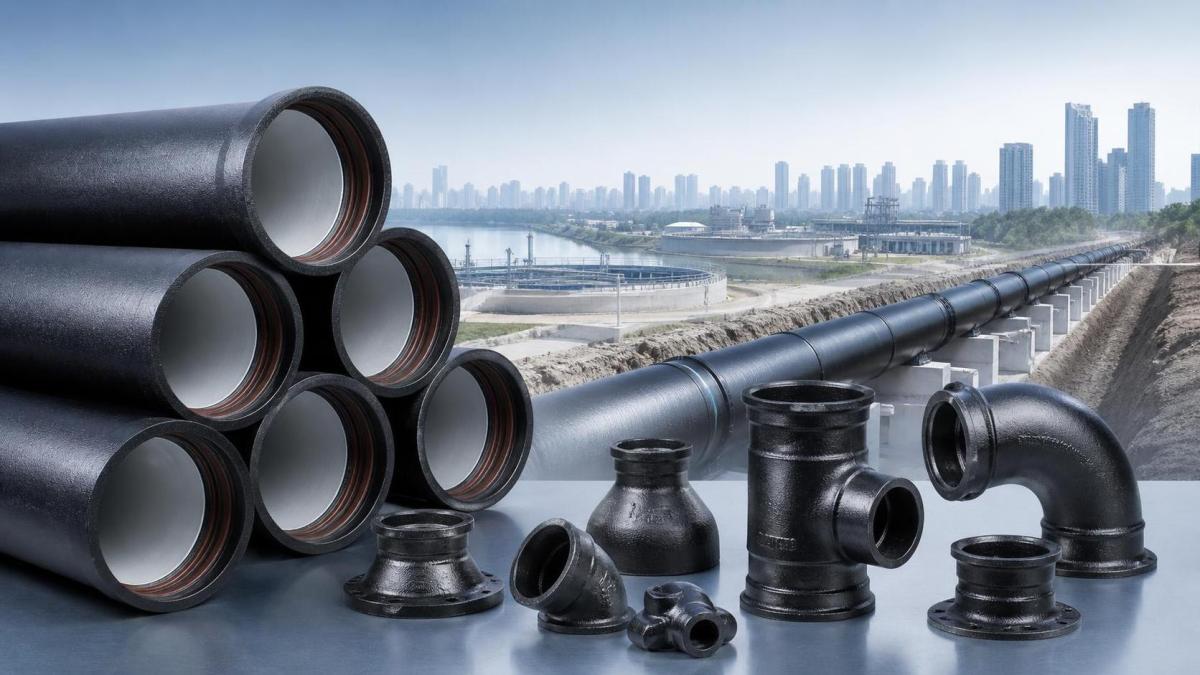
That makes the market attractive in regions investing in aging pipeline renewal, new-town construction, and water security. Evaluators should watch public capital spending, utility upgrade cycles, and contractor preference for materials with proven installation history.
Why Buyers Still Prefer K9 in Infrastructure Procurement
K9 pipes remain relevant because they balance strength, hydraulic performance, and operational reliability. In many projects, procurement teams choose them to reduce leakage risk, improve system stability, and avoid frequent replacement costs over the asset life.
For business readers, this matters because specification stability often translates into repeat demand. Once a municipality, engineering firm, or EPC contractor trusts a product class, future tenders tend to favor suppliers that can demonstrate quality consistency and delivery reliability.
Where Market Growth Is Coming From
The strongest demand is coming from water transmission, sewage-adjacent utility works, and pipeline rehabilitation programs in fast-urbanizing areas. Infrastructure owners want components that can handle pressure fluctuation, soil movement, and long operating cycles without frequent intervention.
Related pipeline accessories also benefit from this trend. Components such as Socket Elbow are often evaluated alongside main pipe orders because system compatibility and joint reliability affect total project performance.
In practice, growth is not driven by one large segment alone. It comes from many mid-sized procurement decisions, each tied to a public works budget, a contractor bill of materials, or a utility replacement schedule.
What Business Evaluators Should Measure
The most useful indicators are not broad market headlines but concrete supply-side and project-side signals. Look at certified manufacturing capacity, material consistency, delivery lead times, after-sales responsiveness, and the supplier’s ability to support repeat orders across multiple project phases.
Quality proof matters as much as production volume. Evaluators should examine melt control, casting process stability, coating performance, and dimensional accuracy, because these factors influence installation speed and field failure risk.
For international buyers, compliance and traceability also matter. A supplier that can document process control and product inspection usually offers less procurement friction and a lower chance of project delay.
How Supply Capability Shapes Competitive Value
The market reward increasingly goes to manufacturers that combine integrated production with stable process control. Companies able to manage smelting, casting, fittings, and sealing components internally can reduce interface risk and improve consistency across orders.
Shanxi Datong Foundry Co.,Ltd., located in Chuandi Industrial Park, Zezhou County, fits this profile as an integrated manufacturing factory focused on ductile iron pipes, fittings, and rubber sealing rings. That kind of setup is valuable when buyers need coordinated supply rather than isolated parts.
For evaluators, integrated capability can shorten qualification cycles and improve confidence in long-term delivery. It also helps when a project needs synchronized shipments across pipe, joint, and fitting categories.
What Could Slow Demand or Compress Margins
Even with strong infrastructure demand, the market is not risk-free. Margin pressure can come from raw material volatility, freight costs, local competition, and tender pricing that favors the lowest upfront bid over lifecycle value.
Project timing is another issue. Public infrastructure spending can be cyclical, so suppliers need enough operational flexibility to handle order gaps without compromising service quality or inventory discipline.
There is also execution risk on the buyer side. If a project underestimates installation complexity or chooses an incompatible specification, the apparent savings can disappear in the field.
How to Judge Market Opportunity Clearly
The best opportunity sits where infrastructure funding, product reliability, and supplier readiness overlap. If a region is upgrading water systems and the buyer values long asset life, K9 ductile iron pipe remains a practical choice rather than a commodity purchase.
Business evaluators should therefore focus on repeatable demand, project qualification strength, and supplier process maturity. Those signals are more predictive than short-term pricing swings or generic market optimism.
In short, the Ductile Iron Pipe K9 market is supported by durable infrastructure needs, not hype. Buyers who assess quality, delivery control, and system compatibility will be better positioned to identify suppliers with real long-term value.
Navigation
Send Us A Message

First class quality service and professional after-sales team.
Get in Touch
*We respect your confidentiality and all information are protected.