Comparing Pipe Coating Lifecycle Costs for Municipal Water Procurement
Comparing Pipe Coating Lifecycle Costs for Municipal Water Procurement
For municipal water procurement teams, evaluating pipe costs beyond the initial purchase price is essential for long-term budget control and network reliability.
Understanding Ductile Iron Pipe Coating Types helps buyers compare corrosion protection, installation conditions, maintenance needs, and expected service life across different project environments.
The lowest quoted pipe price can become the highest network cost when coating performance does not match soil conditions, water chemistry, handling practices, or future maintenance expectations.
Start With Total Installed and Operating Cost
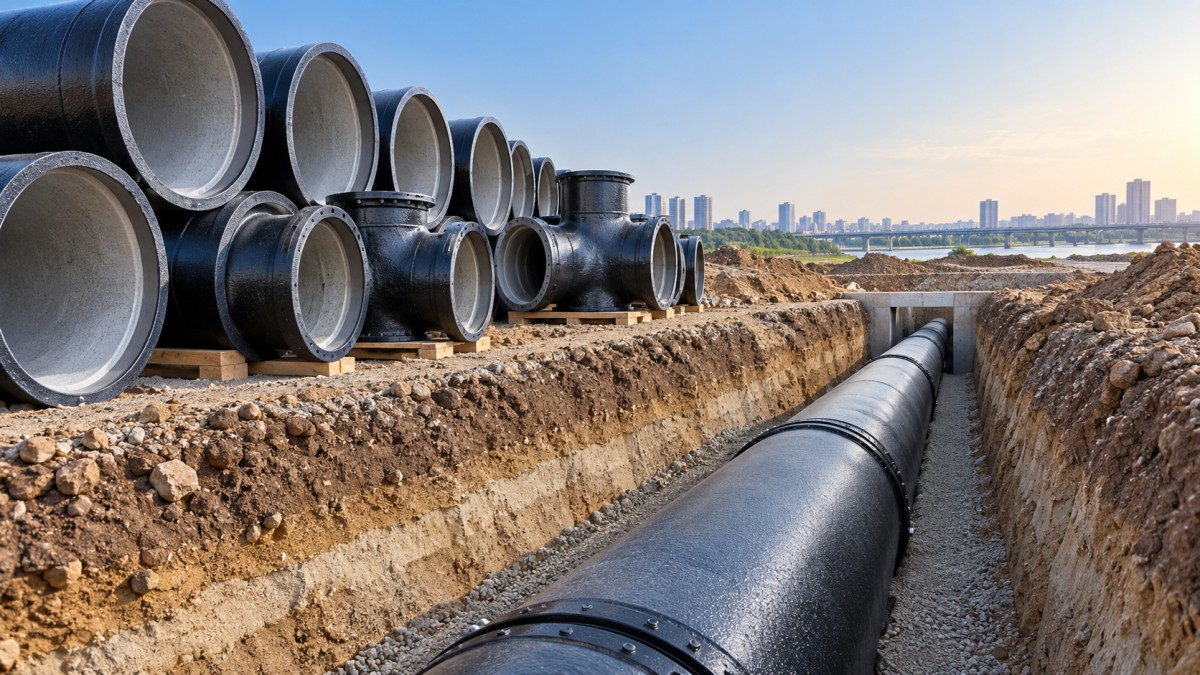
Municipal buyers should begin with lifecycle cost rather than unit price, because pipe coating decisions influence transport losses, installation speed, inspection requirements, repair frequency, and replacement timing.
A practical comparison covers purchase cost, freight, storage, jointing, field damage repair, cathodic protection requirements, operational risk, maintenance labor, and projected service duration.
Lifecycle analysis should also include the financial impact of service interruptions. Emergency excavation, traffic management, water loss, and public complaints often exceed the original coating premium.
Procurement teams should define the analysis period before comparing bids. A thirty-, fifty-, or one-hundred-year horizon may produce very different conclusions from a simple first-cost comparison.
Discounted cash flow can help buyers compare future repair costs with current capital expenditure. However, assumptions must remain transparent and aligned with local municipal budgeting practices.
When bids provide only coating names, request detailed technical data. Thickness, application method, surface preparation, curing control, and repair procedures all affect real-world performance.
Compare Common Ductile Iron Pipe Coating Types
Ductile Iron Pipe Coating Types generally include metallic zinc systems, zinc-aluminum alloys, epoxy coatings, polyurethane coatings, cement mortar linings, and specialized external protective wraps.
Each system offers different protection mechanisms. Some coatings provide sacrificial corrosion protection, while others create a physical barrier between the ductile iron surface and aggressive surroundings.
Metallic zinc coatings are widely used for buried ductile iron pipe because zinc can protect exposed iron at small damaged areas through electrochemical action.
Zinc-aluminum alloy coatings can offer improved durability in some severe soils. Their initial cost may be higher, but their corrosion resistance can reduce long-term intervention risk.
Epoxy external coatings create a barrier suitable for selected aggressive environments. Buyers should verify adhesion, impact resistance, holiday testing requirements, and compatibility with field repairs.
Polyurethane systems can provide strong mechanical resistance and low permeability. They may be appropriate where abrasion, moisture exposure, or installation handling creates elevated coating damage risk.
Cement mortar linings primarily protect internal pipe surfaces. They support water quality, reduce tuberculation risk, and can lower pumping energy losses by maintaining smoother hydraulic conditions.
Polyethylene encasement is not a replacement for a factory coating system, but it can be an effective supplementary measure in corrosive soil environments.
Match Coating Selection to Soil and Site Conditions
Soil investigation is one of the most valuable procurement inputs. Resistivity, moisture, chloride content, sulfate concentration, pH, redox potential, and stray current exposure affect corrosion probability.
Low-resistivity soils generally present greater corrosion risk. However, a single soil reading should not determine selection because site conditions can vary significantly along a pipeline route.
Procurement specifications should identify known risk zones, including reclaimed land, industrial corridors, tidal areas, contaminated ground, and sections near electrical infrastructure.
Stray current deserves particular attention near rail systems, substations, mining facilities, and electrified transport corridors. Standard coating assumptions may be inadequate in these locations.
Installation conditions also matter. Rocky trenches, limited access, deep excavation, and crowded utility corridors increase the likelihood of coating impact or abrasion during construction.
Where field handling is demanding, buyers should evaluate coating toughness alongside corrosion resistance. A highly protective system loses value if routine installation damage is difficult to detect or repair.
Project documents should specify inspection responsibilities. Contractors, pipe suppliers, and municipal inspectors need a clear process for identifying, documenting, and repairing damaged coating areas.
Assess Installation and Handling Costs Before Award
Coating systems influence more than material price. They can change lifting requirements, storage limitations, joint preparation, repair material needs, inspection time, and contractor training requirements.
Some high-performance coatings require careful handling to avoid surface damage. Others tolerate normal construction activity better and therefore reduce the need for frequent field touch-up work.
Buyers should ask suppliers for documented repair procedures, including surface preparation standards, curing times, acceptable weather conditions, and quality acceptance criteria for repaired areas.
Field repair cost should be estimated using realistic quantities. Even a small percentage of damaged pipes can materially affect schedules when repair materials require controlled curing conditions.
Connection points deserve equal attention. Pipe barrels may have robust factory protection, while cut ends, spigots, fittings, and restrained joints can become weak points.
For branching layouts, procurement teams should confirm that compatible protective systems are available for fittings. A properly specified Three-way fitting helps maintain protection continuity at critical distribution junctions.
Supplier capability matters as much as nominal coating type. Integrated production control can improve consistency between casting quality, surface preparation, coating application, and final inspection records.
Calculate Maintenance Risk and Service-Life Value
A lifecycle model should distinguish predictable maintenance from failure-driven maintenance. Planned inspection is manageable, while unplanned repairs create higher labor, traffic, safety, and customer-service costs.
Coating selection affects the likelihood that localized damage becomes a major corrosion point. Systems with protection at small defects can offer meaningful operational value in buried networks.
Maintenance teams should provide historical information during procurement planning. Their records can reveal recurring failures linked to soil zones, joint details, previous coating choices, or installation practices.
Water utilities should also consider consequences of failure, not only probability. A pipe beneath a rural easement presents different financial exposure from one beneath a major urban roadway.
Critical mains serving hospitals, industrial customers, schools, or elevated pressure zones may justify a higher initial coating investment because outage consequences are much greater.
Service-life claims should be evaluated carefully. Ask suppliers to explain the environmental assumptions, applicable standards, coating thicknesses, and evidence supporting projected durability.
Procurement teams should avoid relying on generic life statements without local context. A coating that performs well in ordinary soil may require supplementary protection in highly aggressive ground.
Build Better Tender Specifications and Bid Comparisons
Effective specifications describe required performance, verification methods, and site conditions instead of simply naming a coating. This approach improves comparability while allowing qualified technical alternatives.
Require bidders to state the coating system, nominal thickness, application process, relevant standards, test methods, repair procedure, and any limitations affecting performance.
Bid evaluation should assign a meaningful score to lifecycle value. A minor purchase-price advantage should not outweigh substantial differences in maintenance exposure or expected replacement risk.
Ask bidders to provide reference projects with comparable soil, climate, pressure class, and installation conditions. Reference quality is more useful than a long list of unrelated deliveries.
Quality documentation should include traceability from pipe manufacture through coating inspection. Records of thickness testing, visual inspection, adhesion testing, and defect checks support acceptance decisions.
Municipal buyers should confirm whether coating repairs are included in the contractor's scope. Unclear responsibility can create disputes and incomplete protection during construction.
Where project risk is high, include pre-installation trial sections. A trial allows the utility to verify handling practices, repair methods, and inspection criteria before full-scale construction begins.
Use a Practical Decision Framework
Procurement teams can compare Ductile Iron Pipe Coating Types using five questions: What is the environment, what failures are likely, what repairs cost, and who manages quality?
First, classify each pipeline section by corrosion severity and failure consequence. This prevents one generic coating decision from being applied across fundamentally different operating conditions.
Second, compare installed cost rather than pipe price. Include protective accessories, encasement, inspection, field repair materials, contractor labor, and expected construction productivity.
Third, estimate long-term exposure using local maintenance data. Historic break rates and corrosion patterns usually provide stronger decision support than broad industry averages alone.
Fourth, evaluate supplier documentation and technical support. Coating performance depends on consistent manufacturing control, compliant handling guidance, and practical support when site issues arise.
Finally, document the selection rationale. A clear decision record helps procurement, engineering, operations, and finance teams align around the cost, risk, and service-life tradeoffs.
Conclusion
Municipal water procurement should treat coating selection as a network reliability decision, not a minor product feature. Initial savings can disappear quickly when corrosion protection is underspecified.
The strongest procurement outcome comes from matching coating performance to soil conditions, installation realities, maintenance consequences, and the required service life of each pipeline section.
By comparing Ductile Iron Pipe Coating Types through total lifecycle cost, municipalities can select ductile iron pipe systems that protect capital budgets, reduce disruption, and support dependable water delivery.
Navigation
Send Us A Message

First class quality service and professional after-sales team.
Get in Touch
*We respect your confidentiality and all information are protected.