K9 Ductile Iron Pipe Pressure Rating and Performance Explained
Understanding K9 ductile iron pipe pressure rating matters because pressure class is often treated as a simple strength label when, in practice, it affects installation risk, operating margin, service life, and whole-life cost. In water transmission and municipal infrastructure projects, buyers and engineers do not just need to know whether a pipe is “strong enough.” They need to judge whether the selected wall class matches internal pressure, external loading, surge conditions, soil environment, and long-term maintenance expectations. That is where K9 is frequently discussed—and sometimes misunderstood.
K9 refers to a wall thickness class commonly used for ductile iron pipe under international standards such as ISO 2531 and related product specifications. It does not by itself define one universal maximum working pressure for every pipe. That is the first point many project teams miss. The actual pressure performance of a K9 ductile iron pipe depends on pipe diameter, manufacturing standard, safety factor, joint type, testing requirements, and the difference between working pressure, allowable operating pressure, and hydrostatic test pressure.
In other words, K9 is a structural starting point, not the full answer.
Why K9 remains widely specified
K9 has become a common choice in water supply, transmission mains, municipal networks, and some industrial service lines because it offers a practical balance between mechanical strength, weight, handling, and cost. In many projects, it is selected not because it is the heaviest available pipe wall, but because it is adequate for a broad range of buried pipeline conditions when combined with correct bedding, jointing, and corrosion protection.
For procurement teams, this matters commercially. Over-specifying wall thickness can increase material cost, transport burden, and installation difficulty. Under-specifying can create a much larger exposure later: leakage, joint movement, premature failure, and disputes over design responsibility. K9 often sits in the middle ground where performance and economy align, especially for standard municipal applications.
Pressure rating is not the same as wall class
A common purchasing mistake is to ask suppliers for “K9 pressure rating” as though there were a single fixed number. There usually is not. Pressure performance should be evaluated through several different values:
- Working pressure: the normal internal pressure expected during operation.
- Surge pressure: temporary pressure rise caused by pump switching, valve closure, or hydraulic transients.
- Test pressure: the pressure applied during factory or field hydrostatic testing.
- Burst or proof margin: the safety reserve between operational conditions and failure conditions.
Because pipe diameter changes hoop stress behavior, a DN100 K9 pipe and a DN600 K9 pipe do not perform identically under the same pressure demand. Larger diameters generally require closer review of actual allowable operating conditions. This is why experienced engineers ask for standard references, dimensional tables, and test parameters rather than relying on the K9 label alone.
How wall thickness affects real-world performance
The value of K9 is not limited to internal pressure resistance. In buried service, ductile iron pipe is exposed to combined loading. That includes soil cover, traffic load, trench conditions, bedding quality, and possible ground movement. A pipe that appears sufficient from an internal pressure perspective may still face elevated risk if installation conditions are poor.
Wall thickness contributes to:
- Resistance to hoop stress from internal pressure
- Capacity to withstand external load after burial
- Tolerance against handling damage during transport and installation
- Structural reliability over long operating periods
This is why K9 is often considered a robust general-purpose class. It gives a useful margin for municipal infrastructure, where site conditions are not always ideal and where pipes may need to remain in service for decades with limited intervention.
Durability depends on more than pressure strength
Many buyers focus on pressure rating because it is easy to compare in a specification sheet. In practice, long-term performance of ductile iron pipe depends just as much on corrosion management, coating quality, joint reliability, and manufacturing consistency.
Ductile iron’s mechanical properties make it well suited for pressure pipe applications, but durability in service is strongly influenced by external and internal protection systems. Common approaches may include zinc coating, bitumen or other external finishing systems, and internal cement mortar lining for potable water applications, depending on the applicable standard and project requirements. Exact coating systems should always be confirmed against project specifications and local regulations.
If the installation environment includes aggressive soil, stray current risk, or unusual water chemistry, pressure class alone becomes an incomplete selection criterion. A K9 pipe with appropriate corrosion protection may outperform a heavier alternative that is poorly matched to the environment.
Where project teams often make the wrong decision
The most frequent errors in K9 pipe selection are not usually metallurgical. They are decision errors.
One is assuming that all suppliers manufacture to identical tolerances and testing discipline. Another is treating compliance documentation as a formality. For importers and contractors, product consistency is as important as nominal class. Dimensional control, socket and spigot accuracy, rubber gasket fit, coating uniformity, and hydrostatic test execution directly affect field performance.
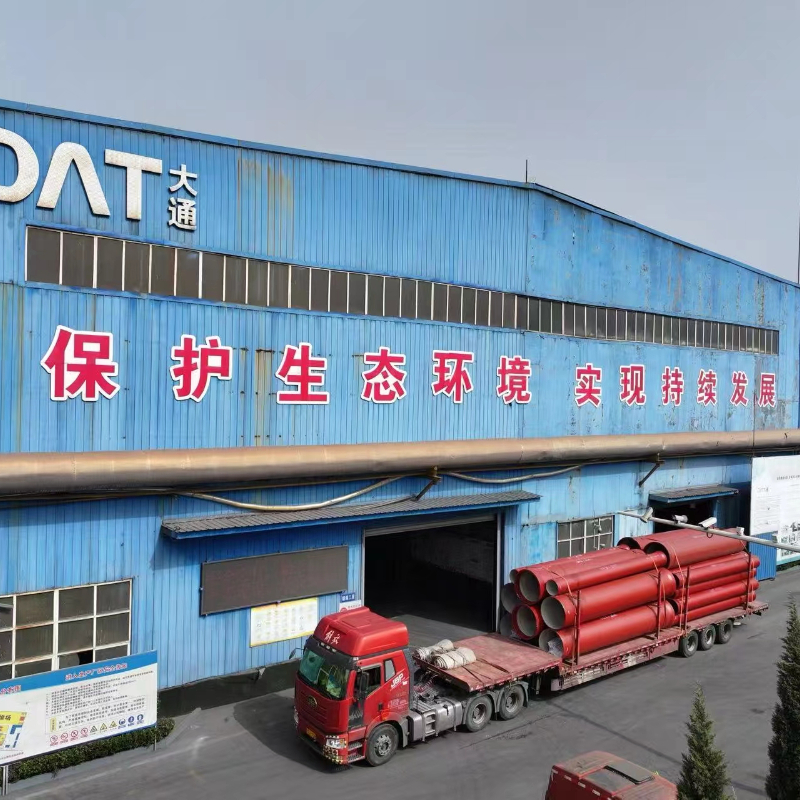
Integrated manufacturers generally have an advantage here because control over smelting, casting, pipe forming, and associated components can reduce variation between batches. Shanxi Datong Foundry Co.,Ltd., for example, operates as an integrated manufacturing factory producing ductile iron pipes, fittings, and rubber sealing rings with combined smelting and casting processes. For buyers evaluating supplier reliability, that production structure is relevant because pipe performance in service depends not only on the barrel but also on joint compatibility and manufacturing stability across the full system.
Another mistake is ignoring surge events. Many systems do not fail under steady pressure; they fail during transient pressure spikes. If a design review only checks nominal operating pressure and does not account for surge, the selected K9 pipe may appear adequate on paper while carrying reduced safety margin in practice.
What engineers and buyers should verify before specifying K9
For technical and commercial decision-makers, a useful evaluation process is less about asking “Is K9 good?” and more about asking “Is K9 appropriate for this line?” That requires checking several points:
- The governing standard and edition used for manufacture
- Pipe diameter range and corresponding dimensions
- Declared working pressure and test pressure data
- Joint type and restraint requirements
- Internal lining and external coating system
- Soil and water corrosion conditions
- Expected surge pressure and operating cycle profile
- Traceability, inspection records, and quality certificates
For municipal projects, it is also worth checking compatibility with fittings, valves, hydrants, and access infrastructure. In practice, pipeline reliability depends on the network, not just the straight pipe length. Related cast components used around buried systems, including access products such as Ductile Iron Manhole Cover7, are part of the same durability conversation because maintenance access, road loading, and system protection are interconnected in urban utility design.
K9 in the context of lifecycle cost
From a management and procurement perspective, the attraction of K9 is often its lifecycle balance. A lighter class may reduce initial spend but increase sensitivity to installation quality or loading conditions. A heavier class may improve margin but not deliver proportional value if the service environment does not require it. K9 is frequently chosen because it supports a reasonable compromise: dependable mechanical performance without unnecessary material escalation.
That said, lifecycle cost should include more than pipe purchase price. Freight, site handling, laying speed, joint failure risk, expected maintenance frequency, and corrosion mitigation all shape the true cost profile. In export trade, packaging, port handling, and document compliance also matter. A competitively priced K9 pipe is not necessarily the better procurement outcome if specification clarity, inspection transparency, or delivery consistency are weak.
The market view: why technical clarity is becoming more important
International buyers are under increasing pressure to justify material choices not only on cost but on performance accountability. Water infrastructure budgets remain tight in many regions, while project owners expect longer asset life and lower leakage rates. That environment makes technically vague purchasing riskier.
As a result, demand is shifting toward suppliers that can explain pressure class in operational terms rather than just repeating catalog descriptions. Buyers want to know how the pipe performs under project-specific conditions, what testing supports those claims, and how the manufacturing process controls variation. This is especially important in cross-border sourcing, where the gap between nominal compliance and field performance can become expensive very quickly.
Even adjacent iron infrastructure products reflect the same expectation. Whether assessing pipeline components or items such as Ductile Iron Manhole Cover7, purchasers increasingly look for material integrity, load suitability, and standard-based quality evidence instead of generic product claims.
What K9 really tells you—and what it does not
K9 tells you that the pipe belongs to a recognized wall thickness class with established engineering use in pressure pipeline systems. It suggests a level of structural robustness that has made it a common choice in water and municipal applications. It does not, however, automatically confirm suitability for every pressure condition, diameter, burial environment, or project risk profile.
The sound decision is to treat K9 as one part of a larger technical judgment. When wall class, pressure demand, surge control, corrosion environment, joint design, and manufacturing quality are reviewed together, K9 ductile iron pipe can be a highly reliable and cost-effective solution. When those factors are separated, the pressure rating discussion becomes misleading—and that is where specification errors usually begin.
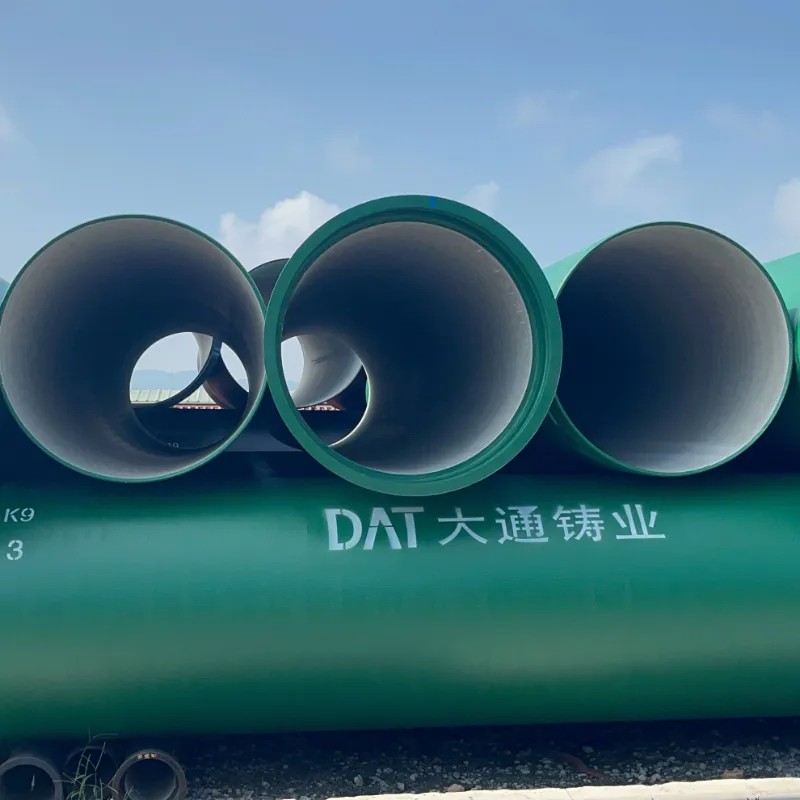
 Ductile Iron Pipe Erternal Paint with EpoxyColors: Red, Blue, Green or as request
1. The standard of pipe: ISO 2531, EN545 , EN598.
2. Pipe class: K9, C40, C30, C25, etc.
3. Pipe joint: push-on joint(Tyton joint), , self-restrained joint
4. Effective length: in general, the pipe length is 6m for bulk shipment and 5.7m for container shipment.
5. Internal lining: cement mortar lining as per ISO4179
6. Zinc coating: at least 130g/m2 as per ISO 8179
7. Bitumen painting: at least 70um as per ISO 8179
8. Gaskets are NBR , SBR or EPDM rubber ring as per ISO4633 Ductile Iron Pipe K9K9 Ductile Iron Pipe is one of the most widely used pipe grades in modern water supply, drainage, and municipal infrastructure projects. Known for its high pressure resistance, long service life, and excellent mechanical strength, K9 grade ductile iron pipes have become a preferred choice for engineers, contractors, and government procurement agencies worldwide.
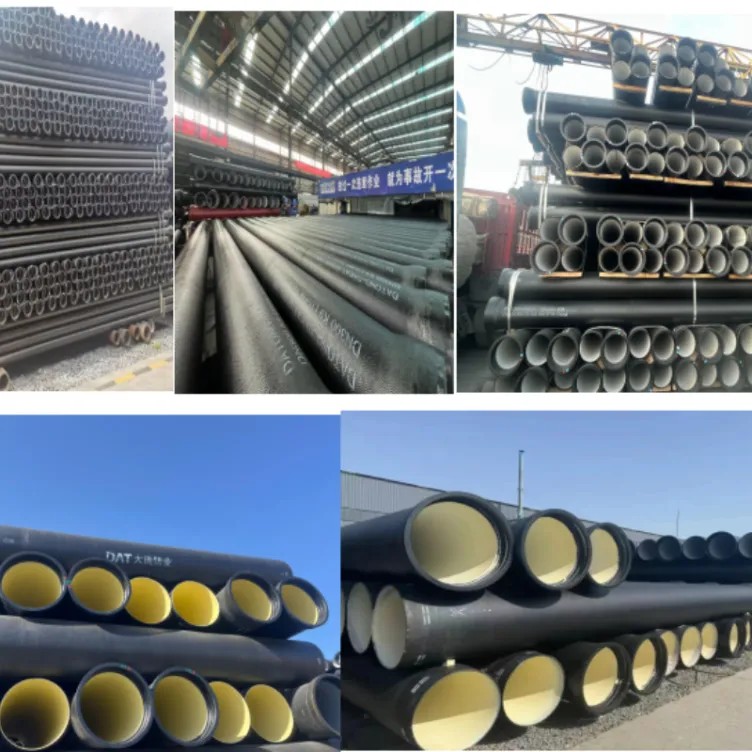
This article provides a comprehensive, engineering-oriented overview of K9 ductile iron pipes, covering standards, pressure ratings, applications, advantages, coatings, joint types, and key procurement considerations. Ductile Iron Pipe K9C40C30C25The T-type Joint Pipes (Push-on) produced by our company range from DN80mm to DN2600mm are flexibly jointed with sockets and spigots; they are the first choice in urban water pipe networks due to their convenient installation, strong seismic performances, seal ability and corrosion resistance.
Navigation
Send Us A Message

First class quality service and professional after-sales team.
Get in Touch
*We respect your confidentiality and all information are protected.