Is ductile iron stronger than PVC?
When comparing piping materials, many engineers and buyers ask: Is ductile iron stronger than PVC? In most demanding applications, ductile iron offers superior strength, impact resistance, and long-term durability, making it a trusted choice for water transmission systems. As an integrated manufacturer of ductile iron pipes, fittings, and rubber sealing rings, Shanxi Datong Foundry Co.,Ltd. understands how material performance directly affects pipeline safety, service life, and project value.
What Is the Real Search Intent Behind This Question?
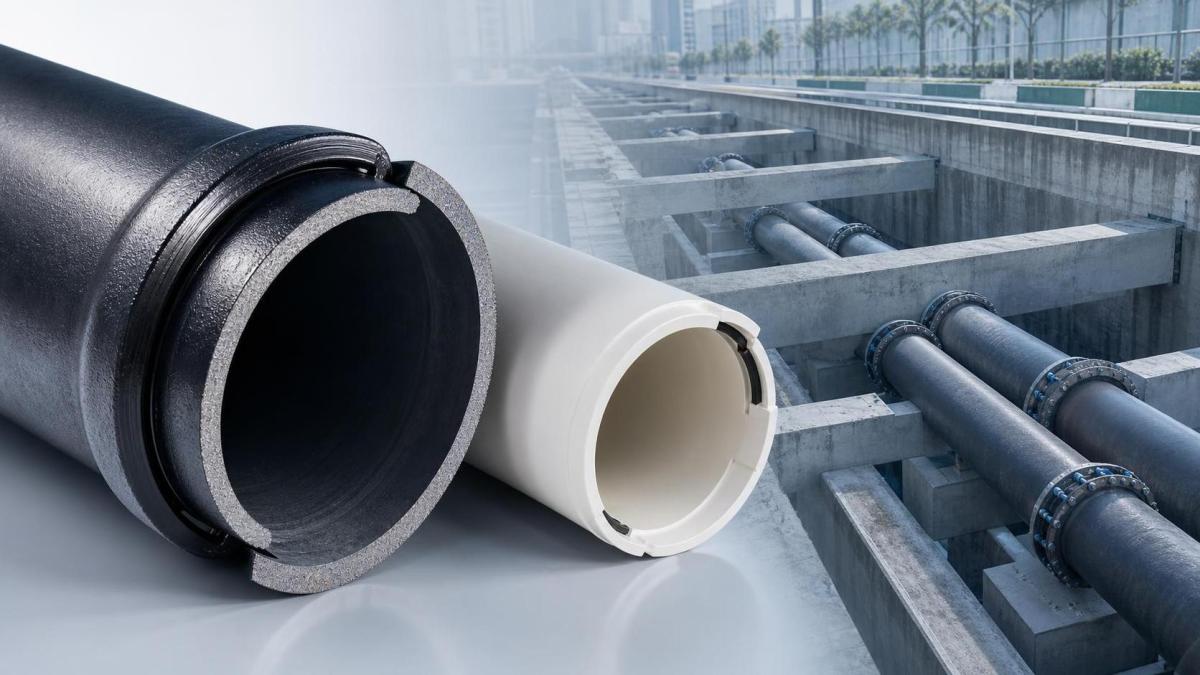
Most readers asking whether ductile iron is stronger than PVC are not looking for a simple yes-or-no answer. They want to know which material is safer, more durable, and more cost-effective.
In practice, the question usually comes from engineers, project owners, contractors, distributors, or procurement teams comparing pipeline materials for water supply, drainage, or municipal infrastructure projects.
Their real concern is not just laboratory strength data. They want to reduce breakage risk, avoid costly maintenance, meet project standards, and choose a material that performs reliably over decades.
That is why the best answer must compare ductile iron and PVC in terms of mechanical strength, impact resistance, pressure performance, installation conditions, service life, and total project value.
Yes, Ductile Iron Is Generally Stronger Than PVC
If the comparison is based on structural strength and resistance to demanding service conditions, ductile iron is generally stronger than PVC. It handles higher external loads and more severe operating environments.
Ductile iron has high tensile strength, good elongation, and excellent toughness. These properties allow it to resist cracking under impact, traffic loads, soil movement, and pressure fluctuations better than standard PVC pipe.
PVC is lightweight, corrosion-resistant, and widely used in many systems. However, it is a plastic material, so its rigidity and impact behavior differ significantly from metal piping under stress.
In buried installations, sudden shocks, poor bedding, cold temperatures, and heavy surface traffic can create conditions where ductile iron shows a clear advantage in structural reliability and long-term stability.
How Do Strength Differences Affect Real Pipeline Performance?
Material strength matters because pipelines rarely operate in ideal conditions. Real systems face transportation handling, trench loading, water hammer, joint movement, shifting soil, and accidental impact during installation or repair.
Ductile iron performs well when systems need to tolerate those combined stresses. Its metal structure provides confidence in municipal water transmission, industrial projects, fire protection networks, and other high-demand applications.
PVC can work effectively in many low to medium demand environments, especially where chemical resistance and lightweight handling are priorities. But strength margins may become more limited under harsher field conditions.
For buyers evaluating long underground service life, the relevant question is often whether the pipe can maintain integrity when installation quality varies and operating conditions become less predictable over time.
Impact Resistance and Toughness Often Decide Long-Term Reliability
One of the biggest practical differences between these materials is toughness. Ductile iron can absorb impact energy better, which helps reduce sudden fractures caused by external blows or localized stress.
This becomes especially important during transportation, unloading, trench work, and backfilling. Pipes are not only tested by internal pressure but also by how they survive real handling on busy construction sites.
PVC may be more vulnerable to cracking when exposed to sharp impact or unfavorable temperature conditions. In colder climates, that concern becomes more important because brittleness can increase under certain situations.
Ductile iron is often selected where reliability under rough service conditions is essential. That decision can reduce the risk of disruption, emergency repair, and hidden lifecycle costs later in the project.
Pressure Capacity Is Only Part of the Comparison
Some buyers compare only pressure ratings, but that gives an incomplete picture. Pressure class is important, yet overall pipe performance also depends on surge resistance, joint security, and tolerance to external loads.
Ductile iron pipes are commonly chosen for pressurized water systems because they combine strong wall performance with dependable jointing systems. This helps maintain network stability during demanding daily operation.
PVC pipes can also meet many pressure requirements, especially in smaller or less severe applications. Still, pressure capability alone does not fully represent how a system behaves under combined mechanical and environmental stress.
When projects involve pump stations, elevation changes, traffic-heavy areas, or frequent pressure fluctuations, designers often place greater value on the broader strength profile of ductile iron.
What About Corrosion, Weight, and Installation?
A balanced comparison should also acknowledge where PVC offers benefits. PVC is lighter than ductile iron, easier to transport by hand, and can reduce labor demands on some projects.
It also resists many forms of chemical corrosion naturally. In certain environments, this makes PVC an attractive solution, especially when loads are modest and installation conditions are controlled carefully.
Ductile iron, however, remains highly competitive because modern pipeline systems can use protective linings and coatings to improve corrosion resistance while preserving mechanical strength and structural confidence.
Weight is often treated as a disadvantage, yet in buried infrastructure it can also support system stability. A heavier and tougher material may provide better resistance to deformation under difficult ground conditions.
Which Material Is Better for Municipal Water Infrastructure?
For municipal water transmission and distribution, ductile iron is frequently preferred when durability, safety, and long service life are the top priorities. Many public networks need strength more than minimum upfront savings.
Urban infrastructure must tolerate road traffic, future excavations, changing soil conditions, and continuous operation. In these settings, a stronger pipe material helps reduce operational risk and protect long-term asset value.
Procurement teams should consider not only purchase price but also failure consequences. A lower-cost material can become expensive if service interruptions, leakage, replacement work, or public disruption occur later.
That is why decision makers often evaluate total cost of ownership rather than material price alone. Ductile iron frequently performs well in that broader commercial and operational assessment.
How Buyers Can Decide Between Ductile Iron and PVC
The best material choice depends on the application. Buyers should begin by reviewing internal pressure, external loading, burial depth, soil conditions, traffic exposure, expected service life, and maintenance expectations.
If the project involves heavy-duty municipal use, demanding industrial service, unstable ground, or high reliability requirements, ductile iron usually deserves serious priority in the specification process.
If the line serves a less demanding environment with controlled installation conditions and lower mechanical risk, PVC may still be a practical option depending on local codes and engineering criteria.
A useful procurement method is to compare the consequences of failure, not just the material properties. In critical systems, stronger and tougher materials often justify their value very clearly.
Why Manufacturing Quality Matters as Much as Material Selection
Even the right material can underperform if production quality is inconsistent. Pipe strength, dimensional accuracy, coating quality, and joint reliability all depend on disciplined manufacturing and process control.
Shanxi Datong Foundry Co.,Ltd. is an integrated manufacturing factory specializing in ductile iron pipes, fittings, and rubber sealing rings, combining smelting and casting processes within one production system.
This integrated capability supports tighter quality management across raw material control, casting consistency, and product compatibility. For infrastructure buyers, that matters because system performance depends on more than pipe walls alone.
In related municipal applications, durable cast products such as Ductile Iron Manhole Cover3 also reflect the broader value of ductile iron in heavy-duty public infrastructure.
Common Misunderstandings About Strength Comparisons
A common mistake is assuming that because PVC is resistant to corrosion, it must therefore be the better long-term choice in every situation. Corrosion resistance and structural strength are different performance categories.
Another misunderstanding is focusing on initial installation convenience alone. Lightweight handling is useful, but long-term asset performance depends on how the pipe behaves after burial and years of operation.
Some also assume that all buried pipes face similar service conditions. In reality, traffic loads, soil movement, trench practices, and pressure events can vary widely and change the best material choice.
Good engineering decisions come from matching material behavior to actual project risk. That approach is far more reliable than choosing only by unit price or simplified product claims.
Final Answer: Is Ductile Iron Stronger Than PVC?
Yes, ductile iron is generally stronger than PVC, especially in terms of impact resistance, toughness, load-bearing performance, and suitability for demanding underground and pressurized applications.
PVC remains useful in many systems, particularly where corrosion resistance, lighter weight, and easier handling are the main priorities. But in harsher service conditions, ductile iron usually provides greater security and durability.
For engineers, contractors, and buyers responsible for water infrastructure, the practical decision should be based on lifecycle value, environmental demands, and the consequences of pipeline failure.
When the project requires strength, stability, and dependable long-term service, ductile iron is often the more trusted choice. That is the reason it continues to play a leading role in critical pipeline networks worldwide.
Navigation
Send Us A Message

First class quality service and professional after-sales team.
Get in Touch
*We respect your confidentiality and all information are protected.