K9 Ductile Iron Pipe Quality Testing and Inspection Guide
In ductile iron pipeline projects, quality problems rarely begin in the trench. They usually start much earlier—during melting, casting, lining, hydrostatic testing, or even at the final visual inspection stage. That is why K9 ductile iron pipe quality testing is not simply a box to check before shipment. It is the process that determines whether a pipe will perform reliably under pressure, resist corrosion over time, and fit properly during installation.
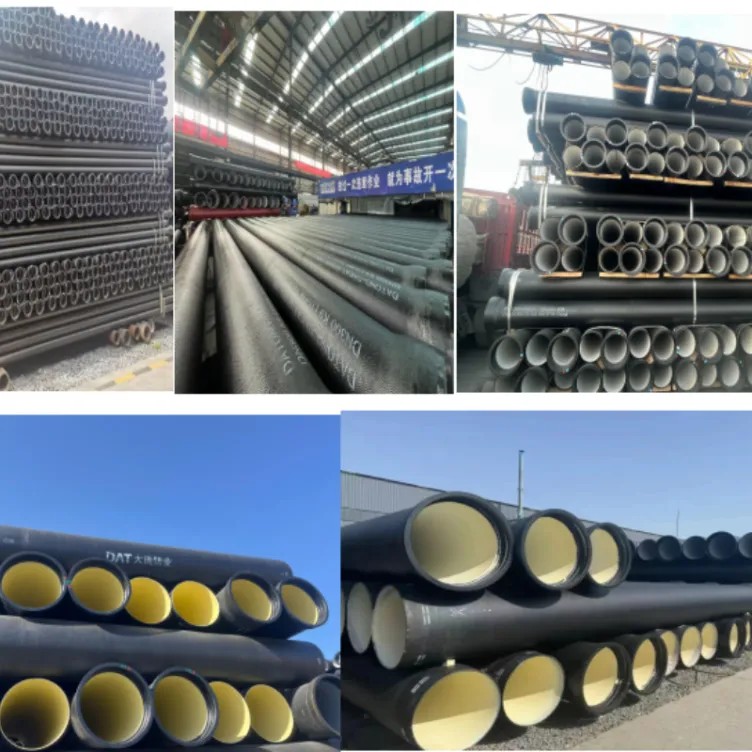
For buyers, contractors, and engineers, the challenge is not just finding a pipe labeled “K9.” The real question is whether the product has been manufactured and inspected with enough discipline to meet the demands of potable water systems, municipal distribution networks, and infrastructure projects where failure is costly. Shanxi Datong Foundry Co.,Ltd., located in Chuandi Industrial Park, Zezhou County, approaches this through an integrated production model that combines smelting and casting processes while also producing fittings and rubber sealing rings. That integration matters, because consistent raw material control and process coordination are central to dependable ductile iron pipe quality.
Why K9 Pipe Inspection Matters More Than Many Buyers Expect
K9 ductile iron pipe is selected for a reason: it balances strength, durability, and practical installation performance. But the designation alone does not guarantee uniform quality from one manufacturer to another. Pipes that appear acceptable on the surface may still have hidden issues such as wall thickness variation, casting defects, poor socket dimensions, inadequate zinc coating, or inconsistent cement mortar lining.
In real project conditions, these issues can show up as leakage at joints, reduced hydraulic performance, premature corrosion, or handling damage before the pipe is even laid. That is why inspection should be understood as a sequence of checkpoints, not a final glance before loading.
Material Control Begins Before the Pipe Takes Shape
The first layer of quality control starts with the molten iron itself. In ductile iron pipe manufacturing, chemical composition has a direct impact on graphite formation, mechanical strength, elongation, and overall casting stability. If the melt chemistry drifts outside an acceptable range, downstream processes may look smooth while the pipe’s internal structure tells a different story.
An integrated factory environment is especially useful here. Because Shanxi Datong Foundry Co.,Ltd. combines smelting and casting, production teams can monitor raw material inputs and molten iron conditions more closely than in fragmented supply arrangements. This helps reduce variability between batches and supports more stable nodularization results.
At this stage, manufacturers typically pay close attention to:
- Chemical composition of the molten iron
- Nodularity and graphite distribution
- Control of impurities that may affect toughness or casting integrity
- Temperature management before casting
For the buyer, this may seem far removed from procurement decisions, but it is actually one of the clearest signs of manufacturing seriousness. A supplier that can explain melt control clearly is often more trustworthy than one that only talks about finished pipe appearance.
Dimensional Inspection: The Quiet Test That Prevents Site Delays
Not every defect is dramatic. Sometimes the biggest project disruption comes from a pipe that is only slightly out of tolerance. Socket and spigot dimensions, wall thickness, effective length, straightness, and roundness all affect whether the pipe can be joined quickly and safely in the field.
Dimensional inspection is especially important for K9 ductile iron pipe because installation efficiency depends on precise mating of pipes, fittings, and rubber sealing rings. A mismatch can lead to assembly difficulty, damaged gaskets, or alignment problems that consume labor on site.
This is also where a manufacturer producing both pipes and related components has an operational advantage. Compatibility is easier to manage when pipes, fittings, and sealing elements are developed within the same manufacturing ecosystem instead of being sourced from disconnected suppliers.
Hydrostatic Pressure Testing Is Non-Negotiable
If there is one inspection step buyers should never treat lightly, it is hydrostatic testing. Pressure testing confirms that the pipe body can withstand internal pressure without leakage or structural failure. It is one of the most practical indicators of production integrity because it reveals problems that visual inspection alone cannot catch.
During hydrostatic testing, each pipe is subjected to a specified internal pressure for a defined period. The goal is not just to “pass” a test, but to verify that the casting is sound and free from hidden cracks, porosity, or weak zones. Pipes intended for water transmission and municipal infrastructure must perform under pressure repeatedly over long service periods, so this test is central to buyer confidence.
When discussing quality testing with a supplier, it is worth asking how pressure tests are carried out, how failures are handled, and whether inspection records are traceable by batch.
Surface Quality and Coating Inspection Are About Long-Term Service, Not Cosmetics
A smooth finish may look reassuring, but surface inspection should go deeper than appearance. For ductile iron pipes, external and internal protection systems are part of the product’s service life strategy. Outside, buyers often look for proper zinc coating and bitumen or equivalent finishing. Inside, cement mortar lining quality matters for flow performance, water protection, and resistance to internal attack.
Inspection at this stage usually includes checking for:
- Surface defects such as scabs, cracks, cold shuts, or visible inclusions
- Uniformity of external coating
- Adhesion and continuity of internal lining
- Damage at the socket, spigot, and pipe ends
It is a common mistake to assume all surface imperfections are harmless. Some are minor and repairable; others may indicate deeper casting or handling problems. A disciplined inspection team knows the difference and applies consistent acceptance criteria.
Mechanical Property Testing Tells You How the Pipe Will Behave Under Stress
K9 ductile iron pipe is valued because it offers both strength and a degree of ductility that helps it tolerate installation loads and service conditions better than brittle materials. Mechanical testing helps confirm that the pipe actually delivers this expected behavior.
Typical checks include tensile strength, elongation, and where relevant, hardness or microstructure evaluation. These tests matter because a pipe is not only expected to resist internal water pressure. It must also endure transport, unloading, bedding variation, and occasional external loads from traffic or soil conditions.
For project purchasers, test certificates are useful—but understanding what they represent is even more important. Numbers should not be viewed in isolation. They should make sense in the context of process consistency, pipe class, and applicable standards.
Joint and Sealing Performance Should Never Be an Afterthought
Even a well-cast pipe can underperform if the joint system is poorly controlled. In practice, many field issues arise around sealing reliability rather than pipe barrel failure. Since Shanxi Datong Foundry Co.,Ltd. also manufactures rubber sealing rings, joint compatibility can be managed more coherently during production and inspection.
This matters for insertion force, sealing compression, deflection performance, and leak resistance after installation. Buyers evaluating a supplier should pay attention to how the gaskets are stored, inspected, and matched to socket geometry. Small variations here can create expensive trouble later.
In broader pipeline systems, flow control components also need similar discipline. For example, procurement teams comparing valves and line accessories may review products such as the Eccentric Hemispherical Valve alongside pipework to ensure the whole network is built around reliable pressure-bearing components rather than isolated product decisions.
How to Evaluate a Manufacturer Beyond the Sample Pipe
A polished sample can be misleading. What buyers really need to understand is whether the manufacturer can maintain quality consistently across production runs. A good evaluation often includes a few straightforward questions:
- Is the smelting process controlled in-house or outsourced?
- Are casting, coating, and lining steps traceable by batch?
- What dimensional and hydrostatic tests are performed on finished pipes?
- How are non-conforming products identified and separated?
- Can the supplier explain inspection standards clearly without vague language?
These questions often reveal more than a brochure does. Consistency, traceability, and process transparency are usually better indicators of future performance than broad marketing claims.
A Practical Way to Read Inspection Results
When reviewing a mill test report or inspection documentation, avoid focusing on one line item only. A pipe that meets chemical or tensile requirements but shows poor coating control or dimensional inconsistency still poses project risk. Think in layers: material integrity, geometry, pressure resistance, lining quality, and sealing compatibility all work together.
This is especially relevant in municipal water and infrastructure applications, where pipes are expected to remain in service for decades. A lower upfront price can become expensive if installation slows down, leakage rates rise, or replacement cycles arrive too soon.
Quality testing and inspection, then, should not be treated as paperwork attached to the shipment. They are evidence of how seriously the manufacturer manages risk from furnace to final dispatch.
For anyone sourcing K9 ductile iron pipe, the safest approach is to look for a supplier that can connect every stage of production with a clear inspection logic. That is where integrated manufacturing has real value. When smelting, casting, pipe production, fittings, and sealing ring coordination are managed within one system, quality control becomes less reactive and more built-in from the start. And in pipeline projects, that kind of control is often what separates a product that merely arrives from one that performs.
 Ductile Iron Pipe Export ISO2531 & EN545Overview
1. Ductile cast iron Pipe are mainly used for transferring drinkable water, waste water and for irrigation.
2. Standard: ISO2531, EN545, EN598
3. Coating: Metallic zinc spray with Bituminous Coating (Outside) Cement mortar lining (Inside). Epoxy coating available upon request.
4. Available joint method: T type; Self-anchor; Flange
5. Material: Ductile Iron
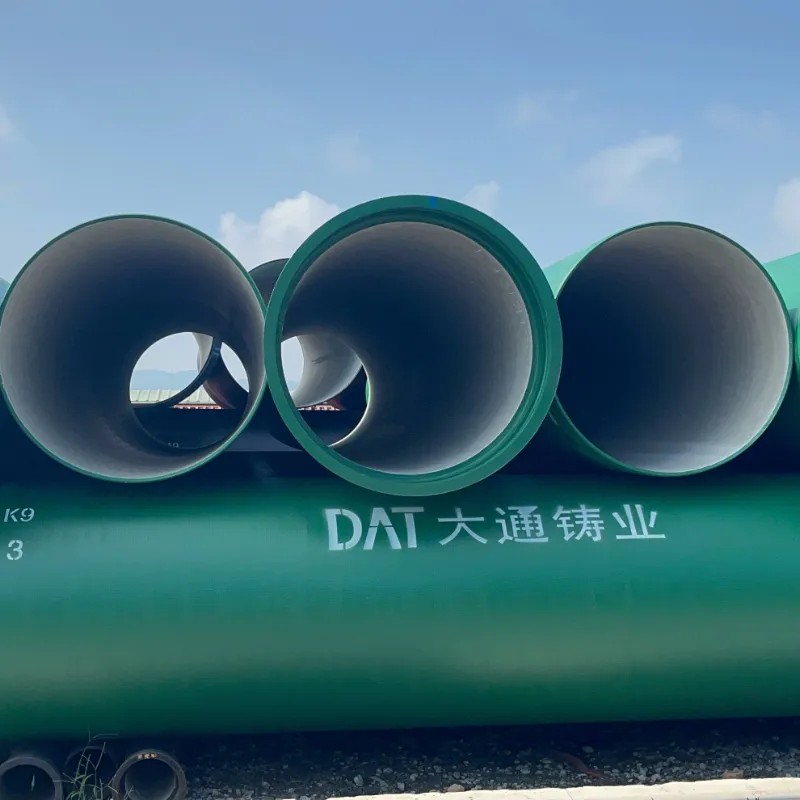
Product ranging from: 80mm- 2600mm Ductile Iron Pipe Erternal Paint with EpoxyColors: Red, Blue, Green or as request
1. The standard of pipe: ISO 2531, EN545 , EN598.
2. Pipe class: K9, C40, C30, C25, etc.
3. Pipe joint: push-on joint(Tyton joint), , self-restrained joint
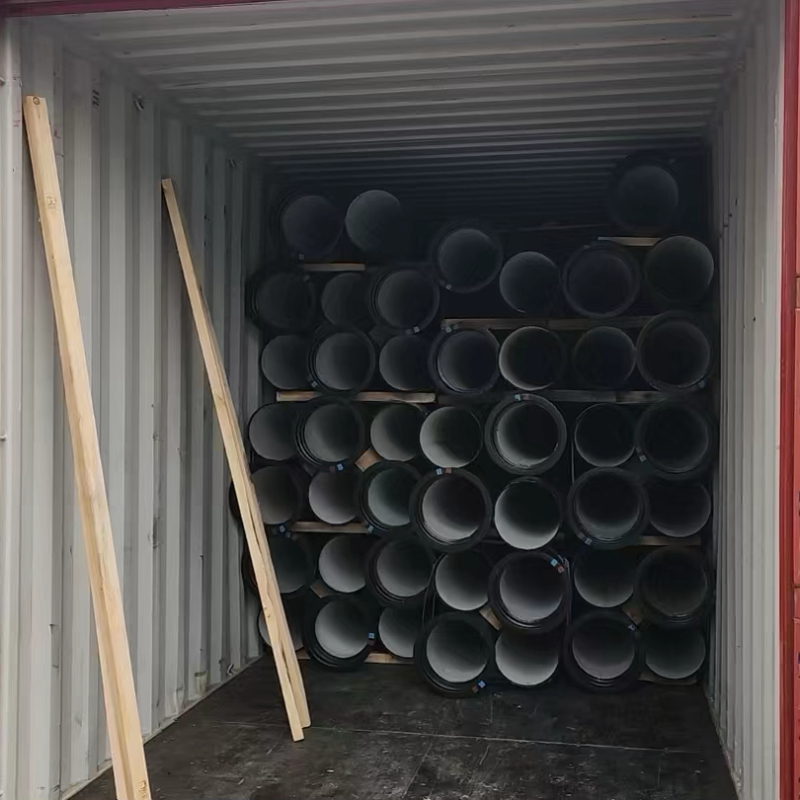
4. Effective length: in general, the pipe length is 6m for bulk shipment and 5.7m for container shipment.
5. Internal lining: cement mortar lining as per ISO4179
6. Zinc coating: at least 130g/m2 as per ISO 8179
7. Bitumen painting: at least 70um as per ISO 8179
8. Gaskets are NBR , SBR or EPDM rubber ring as per ISO4633 Ductile Iron Pipe K9K9 Ductile Iron Pipe is one of the most widely used pipe grades in modern water supply, drainage, and municipal infrastructure projects. Known for its high pressure resistance, long service life, and excellent mechanical strength, K9 grade ductile iron pipes have become a preferred choice for engineers, contractors, and government procurement agencies worldwide.
This article provides a comprehensive, engineering-oriented overview of K9 ductile iron pipes, covering standards, pressure ratings, applications, advantages, coatings, joint types, and key procurement considerations.
Navigation
Send Us A Message

First class quality service and professional after-sales team.
Get in Touch
*We respect your confidentiality and all information are protected.