What is the pressure rating of K9 DI pipe?
What is the pressure rating of K9 DI pipe?
When discussing ductile iron pipeline performance, one common question is simple on the surface but often misunderstood in practice: what is the pressure rating of K9 DI pipe? The short answer is that K9 is not a single “pressure number” stamped across every project. It is a wall-thickness class under common ductile iron pipe standards, and the actual allowable operating pressure depends on pipe diameter, joint type, installation conditions, surge allowance, and the standard being applied.
That distinction matters. On many municipal tenders, people casually ask for “K9 pressure pipe” as if K9 itself were the pressure class. In real engineering work, that shortcut can create confusion, especially when the line will face fluctuating pump pressure, water hammer, buried traffic loads, or corrosive soil conditions. A K9 pipe is generally chosen because it offers a robust balance between mechanical strength, durability, and practicality for water networks, not because one universal pressure figure automatically fits every diameter and every site.
For buyers and contractors, the safer way to read the question is this: under the relevant standard and for the actual pipe size, what pressure can a K9 ductile iron pipe system safely handle in operation? That is where the useful answer begins.
K9 means wall class, not a stand-alone pressure class
In ductile iron pipe terminology, K9 refers to a standardized pipe class widely used under systems such as ISO 2531 and EN 545. It mainly describes the pipe wall thickness relative to diameter. Thicker walls generally improve resistance to internal pressure and external loading, but the pressure rating still has to be calculated or checked against the manufacturer’s technical table and the governing standard.
This is one reason experienced engineers rarely evaluate a DI pipe by “K class” alone. They also check nominal diameter, socket and spigot design, gasket type, test pressure requirements, and whether the line is for potable water, raw water, sewage, fire protection, or industrial service. A DN100 K9 pipe and a DN600 K9 pipe are both K9, but nobody serious expects them to share the same pressure capability just because the class name matches.
With ductile iron, material properties are part of the story as well. Typical values supplied for compliant products include tensile strength of at least 420 MPa, yield strength of at least 300 MPa, and hardness not exceeding 230 HB. Those are important because pressure resistance is not only about geometry; it also depends on whether the iron quality and casting consistency are actually under control.
So what pressure can a K9 pipe usually handle?
In the market, you will often hear general statements that K9 ductile iron pipe is suitable for medium- to high-pressure water transmission and distribution networks. That is broadly true, but it is still a general statement. The exact allowable operating pressure is usually provided in manufacturer data sheets by diameter and standard, and those values should be checked before procurement.
What can be said with confidence is that K9 is commonly used in municipal water supply systems because it provides enough wall strength for many buried pressure pipelines while remaining economical and widely available. It is also used in sewage systems, industrial pipelines, firefighting networks, and infrastructure projects where pressure reliability and long service life are more important than shaving a little weight from the pipe wall.
A useful rule in project discussions is this: do not ask only for the “pressure rating of K9.” Ask for the allowable working pressure, hydrostatic test pressure, and surge conditions for the exact DN and joint configuration. If the line is pump-fed, on uneven topography, or exposed to frequent valve operations, transient pressure can become more decisive than static pressure.
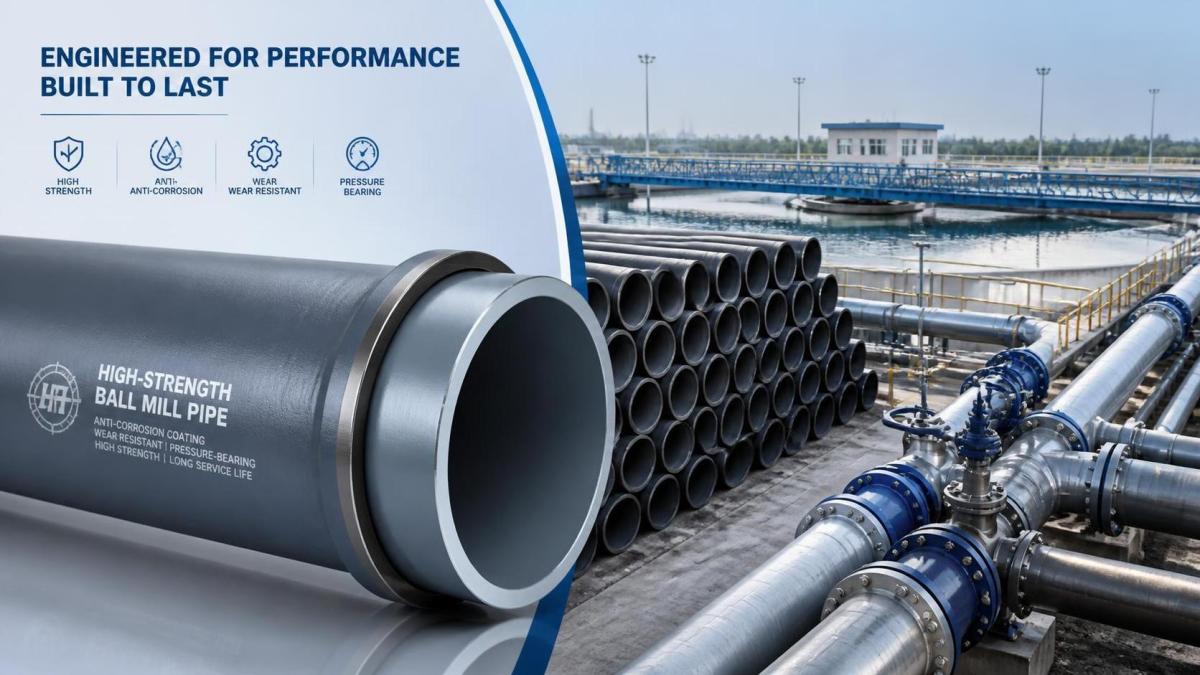
Why K9 is so common in water infrastructure
There is a practical reason K9 appears so often on water supply specifications. It sits in a workable middle ground. Lighter classes may be sufficient in some low-pressure applications, but they offer less margin against handling damage, installation mistakes, or unexpected external loads. Heavier options exist, yet they are not always necessary and can raise transport and installation costs. K9 has long been treated as a dependable baseline for many buried mains.
In foundry and pipeline supply work, this balance shows up repeatedly. Projects rarely fail because someone chose a pipe that was “too strong.” They fail because the pressure regime was oversimplified, the soil aggressiveness was underestimated, or the pipe, fitting, and gasket system were treated as separate purchases instead of one working assembly.
That integrated view is one reason manufacturers that combine smelting, casting, pipe production, fittings, and rubber sealing rings can be useful to work with. Shanxi Datong Foundry Co., Ltd., located in Chuandi Industrial Park, Zezhou County, operates as an integrated manufacturing factory specializing in ductile iron pipes, fittings, and rubber sealing rings, combining smelting and casting processes. In this kind of setup, consistency between the pipe body, socket dimensions, and sealing interface usually gets more attention than in fragmented sourcing models.
Pressure rating is only part of the real selection decision
A pipe can be strong enough on paper and still be the wrong choice if corrosion protection is weak for the environment. For buried and exposed sections alike, external coating matters more than many buyers expect. Zinc coating, bitumen, and epoxy systems are not decorative extras; they are part of the pipe’s long-term survival strategy.
For example, some ductile iron pipe systems use external zinc coating of at least 130 g/m2 with bitumen coating of at least 70 μm, while specialized external epoxy options may be selected where corrosion risk is higher or project specifications are stricter. In coastal infrastructure, desalination plants, chemical plants, or aggressive municipal environments, coating selection can influence actual service life as much as wall thickness does.
That is why the pipe class should be considered together with lining, external paint, gasket material, and application medium. NBR, SBR, and EPDM rubber do not behave identically. Drinking water lines, sewage service, and certain industrial fluids may call for different sealing materials even if the base pipe class stays K9.
In some projects, a product such as Ductile Iron Pipe Erternal Paint with Epoxy becomes relevant not because epoxy sounds premium, but because the surrounding environment justifies it. That is especially true in industrial water supply, coastal installations, mining projects, and process pipelines where external corrosion exposure is not mild.
What engineers usually check before approving K9
Once the nominal size and service medium are clear, the next checks are usually straightforward but important:
These checks sound basic, but they are where a lot of specification mistakes happen. One common issue is selecting pipe by wall class but leaving fittings, gaskets, and coatings to be “confirmed later.” On paper that saves time. On site it often creates mismatches.
Where K9 performs well, and where extra caution is needed
K9 ductile iron pipe is a comfortable fit for water transmission and distribution, municipal infrastructure, fire protection networks, and many industrial water systems. It is also widely used in sewage and wastewater pipelines when the lining and sealing system are chosen appropriately. Available sizes can extend from DN 80 up to 2,600 mm, with common supply lengths such as 6 m for bulk shipment and 5.7 m for container shipment, which is useful when logistics planning matters as much as hydraulic design.
Extra caution is usually needed in three situations. One is severe surge pressure. Another is highly corrosive external exposure. The third is when the pipeline route includes unstable bedding, poor trench compaction, or heavy traffic loading above shallow cover. In those cases, simply saying “K9 is strong enough” is not engineering; it is guesswork.
The better approach is to confirm whether the standard K9 configuration is sufficient or whether the project needs a different pipe class, restrained joints, upgraded coating, or a different lining system. Sometimes the answer is still K9. Sometimes it is K9 plus a smarter protection package.
A more useful answer than a single pressure number
So, what is the pressure rating of K9 DI pipe? In practical terms, K9 is a proven ductile iron pipe class designed for pressure service, but its actual working pressure rating is not one fixed number independent of pipe diameter and project conditions. If you are comparing options for a water main, the right question is: for this DN, this standard, this joint, and this operating environment, what pressure range is the manufacturer declaring and what safety margin does the design require?
That is the level where decisions become reliable. A good supplier should be able to support that discussion with standard compliance, material properties, coating details, gasket compatibility, and dimensional data, not just a vague assurance that “K9 is pressure resistant.”
If the application includes municipal water, industrial supply, sewage, mining, power plants, or chemical plants, asking for the complete pressure-and-protection package will save more trouble than focusing on the K9 label alone. In pipeline work, the class name opens the conversation. It should not be the end of it.
Navigation
Send Us A Message

First class quality service and professional after-sales team.
Get in Touch
*We respect your confidentiality and all information are protected.