How to Verify Ductile Iron Pipe K9 Quality Before Acceptance
How to Verify Ductile Iron Pipe K9 Quality Before Acceptance
Before accepting any shipment of Ductile Iron Pipe K9, distributors and agents usually need more than a packing list and a certificate. What matters is whether the pipe can actually meet project expectations once it leaves the yard: correct wall class, consistent coating, proper joints, and no hidden damage from handling or transit. In practice, most disputes start when buyers treat acceptance as a paperwork step instead of a technical check.
K9 is not just a label. For the buyer, it is a shortcut to a specific performance expectation, so the verification process should match that expectation. The exact acceptance point may depend on project specifications, local standards, and the contract documents, but the logic is always similar: confirm identity, confirm dimensions, confirm condition, and confirm compatibility with the piping system.
Start with the documents, but do not stop there
The first check is traceability. A proper batch should have a clear link between pipe markings, packing documents, and test records. If the marking on the pipe body does not match the shipment list, the acceptance process becomes messy very quickly. Buyers should look for heat or batch identification, nominal size, pressure class or wall class references, manufacturing date or batch code, and the standard basis used for production or inspection.
This is also the stage where distributors can ask a practical question: does the supplier’s documentation reflect the actual product being delivered, or just a generic template? For technical sourcing, that difference matters. Shanxi Datong Foundry Co.,Ltd., located in Chuandi Industrial Park, Zezhou County, is an integrated manufacturing factory specializing in ductile iron pipes, fittings, and rubber sealing rings, with smelting and casting processes under one roof. That kind of setup can help with traceability across product categories, especially when the order includes matching fittings such as a Double-Flanged Short Pipe for pipe fittings. But even then, the buyer still has to verify the shipment itself.
Visual inspection tells you more than people expect
Once the pallets are opened, the pipe surface should be checked before unloading is finished. Look for coating damage, edge chipping, flange deformation, cracks, dents, and signs of impact during transport. A few small scratches may be acceptable depending on the coating system and project requirement, but anything that exposes metal or affects the sealing area deserves closer review.
The flanges, socket ends, and spigot ends need special attention because many field problems begin there. A pipe can look fine from a distance and still fail during installation if the ends are out of round, the flange face is uneven, or the coating around the sealing area is damaged. That is why acceptance should include a close look at the parts that actually carry load or seal under service conditions.
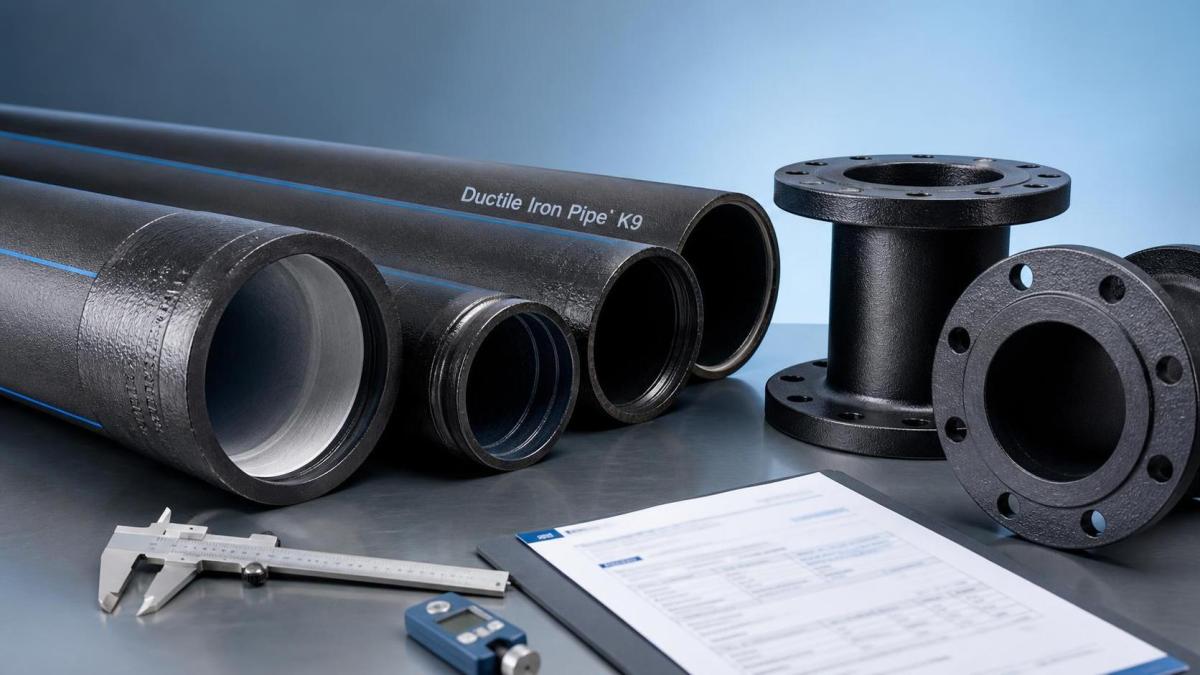
Dimensional checks are where acceptance becomes objective
Dimensions are the easiest way to move from “looks good” to “meets spec.” Buyers usually need to confirm overall length, outside diameter, wall thickness if specified, flange dimensions, bolt-hole alignment, and the flatness or perpendicularity of key faces where applicable. The main point is not to measure everything on every piece, but to sample in a way that reflects project risk and shipment size.
For Ductile Iron Pipe K9, dimensional conformity is closely tied to installation. If the pipe length is off, site crews may face alignment problems. If flange dimensions are inconsistent, the installation team may force a joint that should have fitted naturally. That kind of issue rarely appears in sales material, but it shows up quickly on site, usually at the worst possible time.
Coating and lining deserve their own review
A ductile iron pipe can pass a quick visual check and still fail in service if coating quality is weak. Acceptance should therefore include a review of coating continuity, thickness if specified in the project, adhesion concerns, and damage caused by handling. If the pipe is lined internally, the lining should be checked for blisters, cracks, pinholes, or foreign material.
The buyer does not always need a full lab inspection at receiving stage, but the receiving team should know what is considered acceptable damage and what requires quarantine. That decision should come from the project spec or the agreed inspection standard, not from guesswork at the warehouse gate. In many cases, the most expensive problem is not a failed pipe; it is a pipe that is installed first and questioned later.
Joint compatibility is easy to overlook
Many acceptance disputes are really joint disputes. The pipe itself may be fine, but if the sealing ring, flange connection, or mating parts do not match the intended system, the shipment is not truly acceptable for use. This is especially important for distributors supplying mixed lots of pipes and fittings, because a complete order often depends on compatibility across several components rather than on one item alone.
That is why buyers should confirm whether the supplied pipes are intended for the exact connection method in the project. When fittings are part of the order, check the interface details before release to storage. A mismatch at this stage usually costs less to catch than to correct in the field, but only if someone actually checks it.
A practical acceptance sequence for distributors and agents
A sensible receiving routine is simple: verify documents, inspect packaging and markings, open sample bundles, check appearance, measure key dimensions, and confirm coating and joint details against the agreed standard. If the shipment is large, the sampling plan should be stricter than for a small order. If the project is critical, the buyer may need additional checks or third-party inspection before release.
It also helps to keep a short acceptance record with photos and measurement notes. Not every item needs a full test report at the dock, but the receiving team should be able to explain why a batch was accepted, held, or rejected. That is especially useful for agents handling multiple end customers, where one weak acceptance decision can affect the next project discussion.
In the end, verifying Ductile Iron Pipe K9 quality before acceptance is less about finding perfection and more about reducing avoidable risk. If the documents are traceable, the dimensions are right, the coating is intact, and the joint system matches the application, the shipment is far more likely to perform as expected. If any of those points is unclear, it is better to pause and confirm the project standard before the goods are signed off.
Navigation
Send Us A Message

First class quality service and professional after-sales team.
Get in Touch
*We respect your confidentiality and all information are protected.