K9 Ductile Iron Pipe Standards: ISO 2531 and EN 545 Explained
Understanding K9 ductile iron pipe standards matters because “K9” is often treated in the market as if it were a complete quality guarantee. It is not. K9 is only one part of the specification picture, and buyers who stop at wall class alone can miss more important issues: pressure performance, coating system, dimensional tolerances, joint compatibility, testing, and suitability for potable water service. That is why ISO 2531 and EN 545 are frequently reviewed together in water pipeline procurement and engineering discussions.
For distributors, EPC buyers, municipal engineers, and technical managers, the practical question is not merely what these standards say, but how they affect product selection, bid compliance, installation reliability, and long-term asset performance.
In the ductile iron pipe industry, ISO 2531 is widely recognized as a core product standard covering pipes, fittings, accessories, and their joints for pressure pipelines. EN 545, by contrast, is commonly used in the European water sector and is more application-oriented for water pipelines, with attention to performance expectations linked to drinking water and external service conditions. They overlap significantly, but they are not interchangeable in every tender or approval process.
What K9 actually means in ductile iron pipe specifications
K9 refers to a wall thickness class used for ductile iron pipes. In simple terms, it gives a standardized basis for pipe wall thickness relative to nominal diameter. In export trade, K9 has become the default request for many water supply projects because it offers a familiar balance between mechanical strength, handling practicality, and broad market acceptance.
That said, K9 should not be read as a direct statement of working pressure or a universal indicator of “best quality.” Pressure capability depends on several interacting factors, including nominal diameter, joint design, installation conditions, surge allowance, safety factors, and the standard under which the pipe is manufactured and tested. A K9 pipe for one project can be fully suitable, while in another case the project may require a different class, special lining, restrained joints, or trenchless adaptation.
This is one of the most common misunderstandings in procurement: asking only for “K9 ductile iron pipe” without defining the governing standard, coating requirements, or service environment.
How ISO 2531 is used in real projects
ISO 2531 is an international standard for ductile iron pipes, fittings, accessories, and their joints for pressure pipelines. In practical business terms, it is often the baseline standard referenced in international tenders outside Europe or in projects where multinational contractors want a widely accepted technical framework.
The value of ISO 2531 lies in standardization of key product characteristics such as dimensions, tolerances, mechanical properties, hydrostatic testing, and marking requirements. For cross-border sourcing, this helps reduce ambiguity between buyer and manufacturer. It also creates a common language for inspection agencies, consultants, and project owners.
For buyers, however, ISO 2531 alone does not answer every application question. It defines product requirements, but project specifications may still need to add details such as:
- external coating type and thickness,
- internal lining material,
- joint type and allowable angular deflection,
- rubber gasket material suitability,
- potable water compliance requirements,
- special loads, soil corrosivity, or transport constraints.
This is particularly relevant in infrastructure projects with mixed site conditions. A standard-compliant pipe may still be the wrong choice if the coating system is too basic for aggressive soils or if the lining is not matched to water chemistry.
Where EN 545 becomes more important
EN 545 is the European standard associated with ductile iron pipes, fittings, accessories and joints for water pipelines, including requirements and test methods. In the market, it is especially important when products are destined for Europe, European-funded projects, or projects that follow European design and public health expectations.
The reason EN 545 carries weight is not just geography. Buyers often associate it with stricter application discipline for water supply service, especially in relation to coatings, linings, and system performance. In many tenders, EN 545 is used not simply as a manufacturing reference but as part of a broader compliance package that may also involve drinking water contact approvals, traceability expectations, and third-party inspection.
For exporters, the commercial implication is straightforward: if a buyer asks for EN 545, offering ISO 2531 alone is usually not enough unless the technical file clearly demonstrates equivalence and the tender permits alternatives. In many cases, it will not.
ISO 2531 vs EN 545: the comparison buyers should actually make
The most useful way to compare these standards is not to ask which one is “better,” but which one is being required, and what risk comes from misunderstanding the requirement.
Scope and market use:
ISO 2531 has broader international recognition across pressure pipeline applications. EN 545 is more specifically positioned around water pipelines in the European context.
Tender compliance:
If the project specification explicitly names EN 545, compliance should be assessed against that standard, not assumed from general ductile iron pipe capability. This matters during pre-qualification and document review.
Technical detail expectations:
EN 545-based procurement often comes with clearer expectations on protective systems and testing for water applications. ISO 2531-based orders may leave more room for project-specific customization, which can be an advantage or a source of dispute depending on how well the specification is written.
Documentation burden:
EN 545 projects may require more detailed conformity evidence, especially in regulated markets. That affects lead time, approval cycles, and supplier screening.
Interchangeability risk:
Pipes may look similar dimensionally, but similarity does not equal contractual compliance. This is where many traders and non-technical purchasing teams face claims risk.
Why coatings, linings, and joints matter as much as the pipe body
In long-term water infrastructure performance, failures are not always driven by the iron body itself. Coating damage, unsuitable lining choice, gasket issues, poor joint selection, and installation error often create the actual service problem.
That is why experienced buyers review standard compliance together with the full system design. A K9 pipe under ISO 2531 or EN 545 still needs the right protection strategy for the project environment. Cement mortar lining is common, but water quality, flow conditions, and project design may require closer review. External zinc-based protection systems, finishing layers, and enhanced corrosion measures may also be relevant depending on soil aggressiveness and service life targets.
For trenchless or high-load sections, standard push-in pipe may not be enough. In those cases, a project may need purpose-built solutions such as Custom Ductile Iron Jacking Pipes, where installation method changes the stress profile and therefore the selection logic.
Common procurement mistakes around K9 and standard references
One recurring mistake is issuing a purchase inquiry with only nominal diameter, length, and “K9.” That may produce quotations, but not necessarily comparable offers. Different suppliers may assume different standards, coatings, joint designs, or gasket grades.
Another problem is treating ISO 2531 and EN 545 as if they were just two labels for the same item. They overlap, but from a compliance and documentation perspective, the distinction can be decisive.
A third issue appears in cost-driven sourcing: reducing specification clarity to get a lower initial price. This often shifts cost downstream into inspection delays, compatibility disputes, re-approval, or shortened service life. In water infrastructure, lifecycle reliability usually matters more than a narrow ex-works saving.
How manufacturers and buyers should approach verification
Serious evaluation goes beyond the certificate headline. Buyers should review:
- declared manufacturing standard,
- mechanical and hydrostatic test records,
- dimensional inspection reports,
- coating and lining specifications,
- joint and gasket details,
- factory traceability and marking system,
- inspection arrangements and shipment consistency.
This is where integrated manufacturing capability can matter. A producer that controls major steps across smelting, casting, pipe production, fittings, and rubber sealing ring supply may offer better consistency in system matching and production coordination than a trader assembling from multiple sources. Shanxi Datong Foundry Co., Ltd., for example, operates as an integrated manufacturing factory for ductile iron pipes, fittings, and rubber sealing rings, which is commercially relevant when buyers want tighter control over compatibility and supply continuity rather than only a low unit quote.
That does not replace standard verification, but it does affect risk assessment.
What standard choice means for project decisions
If the project is an international municipal water line with broad tender language, ISO 2531 may be fully appropriate if the rest of the technical specification is well defined. If the project is in Europe, tied to European consultants, or subject to stricter water-pipeline conformity expectations, EN 545 is often the safer and sometimes mandatory route.
For distributors and overseas sales teams, the commercial lesson is simple: ask early whether the buyer needs a product standard, an application standard, or both. For engineers, the technical lesson is to stop using K9 as shorthand for total suitability. For procurement managers, the operational lesson is to compare offers only after normalizing the standard reference, coating system, lining, joint type, and inspection basis.
In other words, ISO 2531 and EN 545 are not just technical citations on a datasheet. They shape contract clarity, approval risk, installation outcomes, and asset durability. The right decision usually comes from reading the standard requirement together with the real service conditions—not from relying on the K9 label alone.
 Flanged Di PipeUsage: for Drinking Water/Sewage
Pressure: Pn10 / Pn16 / Pn25 / Pn40
Specification: DN80-DN2600mm
Origin: China
Production Capacity: 500000 Tons/Year Heating Pipe
 Ductile Iron Pipe Export ISO2531 & EN545Overview
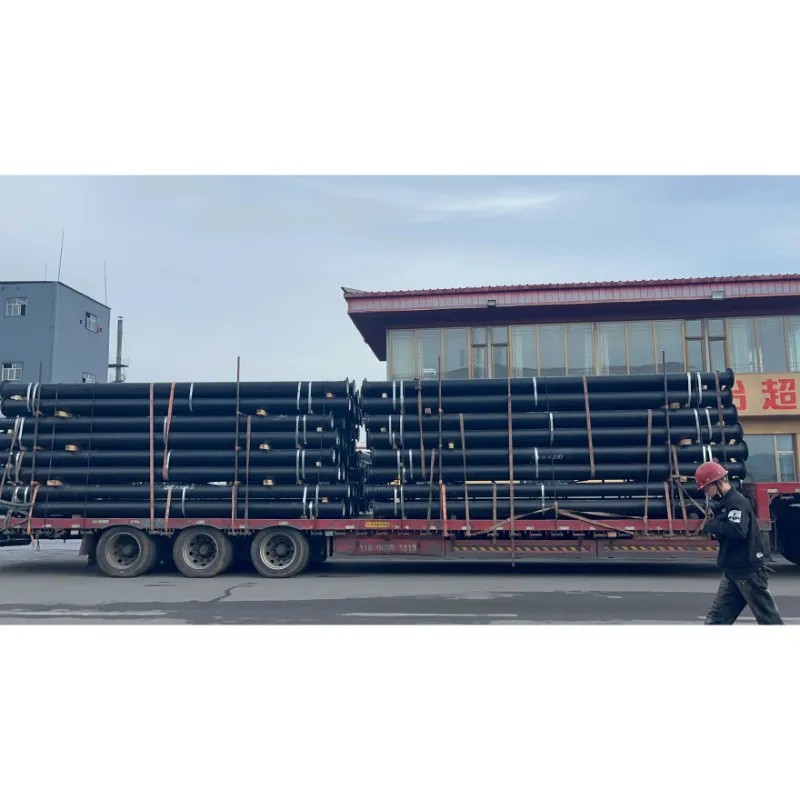
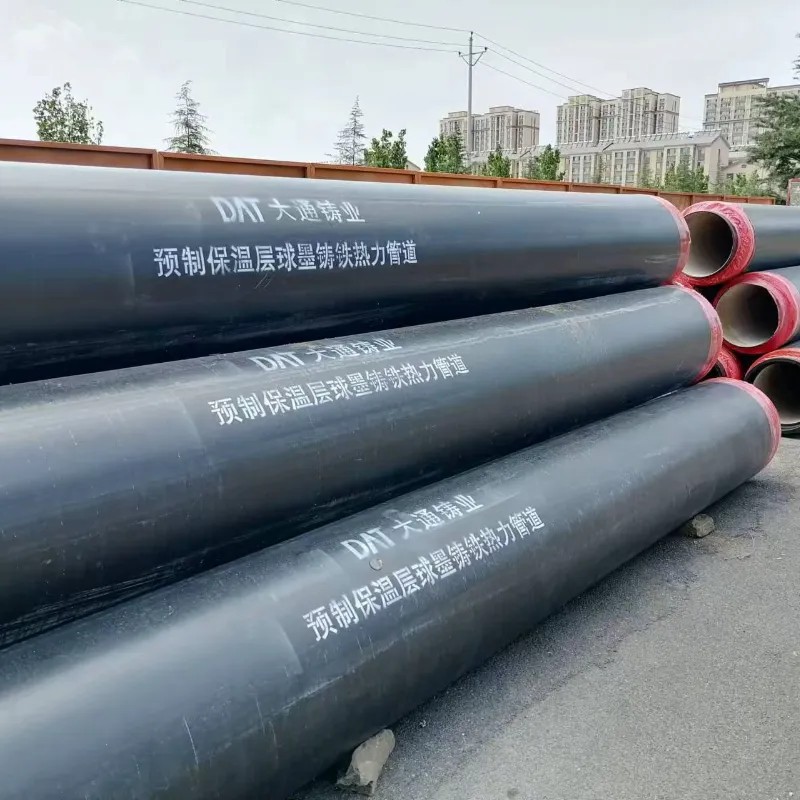
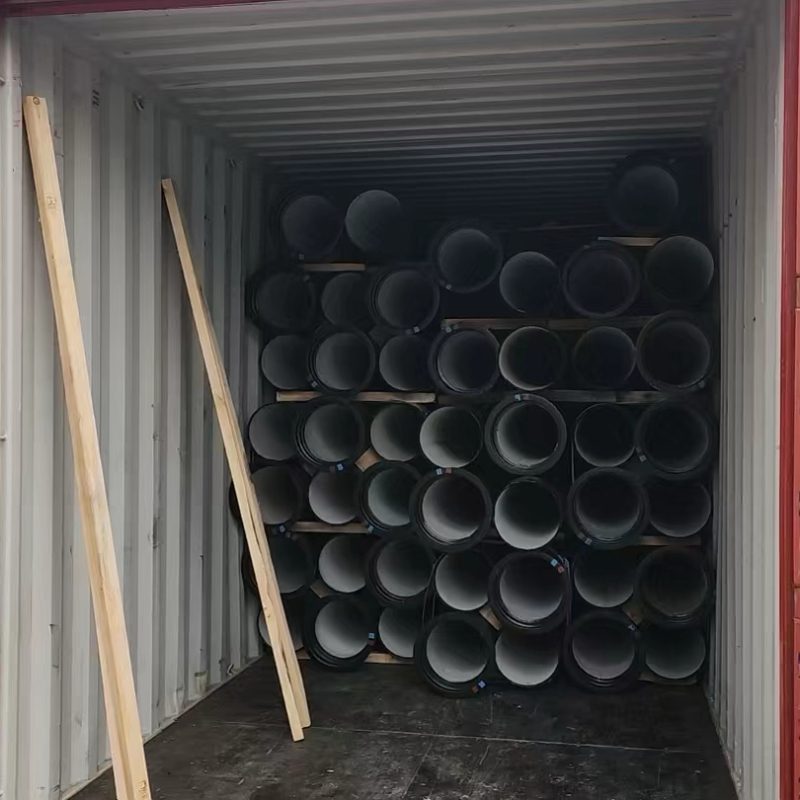
1. Ductile cast iron Pipe are mainly used for transferring drinkable water, waste water and for irrigation.
2. Standard: ISO2531, EN545, EN598
3. Coating: Metallic zinc spray with Bituminous Coating (Outside) Cement mortar lining (Inside). Epoxy coating available upon request.
4. Available joint method: T type; Self-anchor; Flange
5. Material: Ductile Iron
Product ranging from: 80mm- 2600mm
Navigation
Send Us A Message

First class quality service and professional after-sales team.
Get in Touch
*We respect your confidentiality and all information are protected.