When Zinc Pipe Coatings Need a Finishing Layer in Aggressive Environments
When Zinc Pipe Coatings Need a Finishing Layer in Aggressive Environments
Zinc is widely used as an external protective layer for ductile iron pipe because it provides more than a simple barrier. When moisture reaches a small damaged area, zinc can offer sacrificial protection to the iron beneath it. In ordinary buried conditions, that is often a practical and durable approach. The problem begins when the pipe is placed in soil, water, or industrial surroundings that are more aggressive than the coating system was expected to handle.
For operators, the real question is not whether zinc is a good coating. It usually is. The question is whether zinc alone is enough for the actual exposure condition, including the backfill, groundwater, chemical contact, handling damage, and the likelihood that the pipeline will be difficult to inspect after installation. Understanding the available Ductile Iron Pipe Coating Types makes that decision far less guesswork-driven.
Why zinc is not always the complete answer
A zinc layer works best when it is part of a complete corrosion-control strategy rather than the only line of defense. It can slow corrosion and protect exposed iron around minor coating discontinuities, but it is still consumed over time. In wet, conductive, saline, acidic, chemically contaminated, or poorly drained ground, that consumption may occur faster than expected.
A finishing layer, often described as a topcoat or overcoat, separates the zinc from much of the surrounding environment. This reduces direct contact with moisture and corrosive ions while retaining the benefit of the metallic zinc layer underneath. In practice, this is especially useful where site conditions are variable. A route may pass through normal native soil for most of its length, then cross reclaimed land, a drainage channel, a coastal section, or an industrial plot. The difficult section, not the easy one, should drive the coating decision.
It is also worth separating external corrosion protection from internal lining selection. External zinc, bitumen, epoxy, polyurethane, and similar systems address the outside pipe surface. Internal linings are selected around the conveyed medium: potable water, wastewater, raw water, process water, or slurry. One does not replace the other.
Field conditions that usually justify a finishing layer
There is no sensible “always coat everything” rule. Extra protection adds material, inspection requirements, and repair work at joints or damaged areas. But several conditions should prompt a closer review rather than a default zinc-only specification.
- Persistently wet or waterlogged soil. Constant moisture supports electrochemical activity and can make a simple external coating system work much harder over its service life.
- Coastal ground or salt-affected backfill. Chlorides are a familiar concern in marine and near-shore infrastructure. Salt can also be introduced by imported fill, not only by seawater.
- Industrial sites and chemical plant corridors. Historic spills, process drainage, ash deposits, or changing ground chemistry may be more relevant than the soil’s appearance.
- Stray-current risk. Areas near rail systems, electrical installations, or other buried metallic networks deserve project-specific corrosion assessment. A topcoat is not automatically a cure for stray-current corrosion, but it can be part of a broader design response.
- Abrasive installation conditions. Rocky trench bottoms, sharp aggregate, uncontrolled backfill, and difficult pipe handling can scratch or puncture coatings before the line is commissioned.
- High-consequence access constraints. If a line will sit beneath a road, process area, port facility, or dense utility corridor, the cost of later excavation can justify a more robust coating system from the start.
Operators should be cautious with the common assumption that “buried” means “protected.” Burial removes ultraviolet exposure, but it introduces soil chemistry, moisture retention, mechanical loading, and unknown fill material. The trench environment matters as much as the pipe itself.
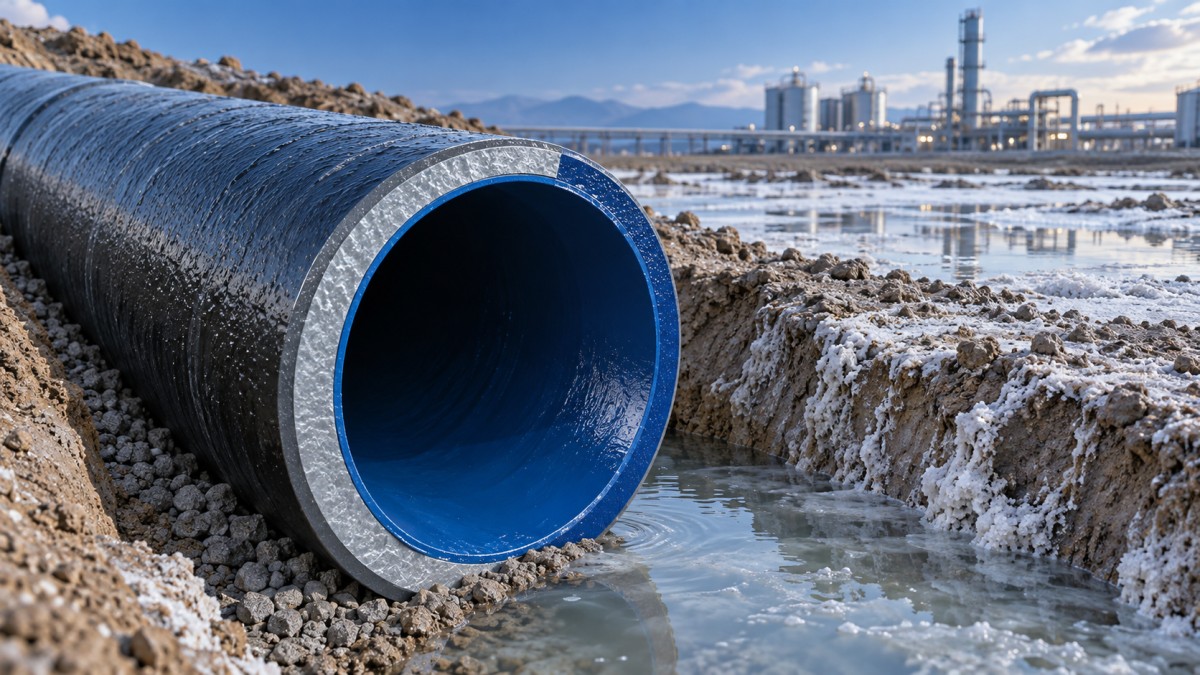
Choosing among ductile iron pipe coating types
The right external system depends on exposure, installation practice, and repair capability. Zinc with a bituminous finishing layer remains a familiar arrangement for many buried water and wastewater applications. A bituminous layer is generally intended to provide an added barrier over the zinc, not to turn a poorly assessed corrosion environment into a low-risk one.
Epoxy-based external paint may be considered where a stronger barrier layer is required, particularly in municipal infrastructure, industrial pipelines, power plants, mining projects, coastal infrastructure, and some chemical-plant applications. However, “epoxy” should never be treated as a complete specification by itself. Film thickness, surface preparation, curing, adhesion, impact resistance, and compatibility with field repairs all need to be defined. An epoxy system that is excellent in one service environment may be unsuitable for another if the preparation or application controls are weak.
For projects requiring an external epoxy option, Ductile Iron Pipe Erternal Paint with Epoxy is available for pipe sizes from DN 80 to DN 2,600 mm and can be considered across water supply, sewage, industrial, fire-protection, and infrastructure applications. The supplied pipe range includes K9, C25, C30, and C40 classifications. Selection still needs to match the project’s pressure design, installation method, and corrosion assessment rather than being based on coating name alone.
What to check before approving zinc plus a topcoat
A coating schedule should begin with the site, not the catalogue. Ask for available soil investigation information, groundwater observations, known contamination, and details of imported bedding or backfill. If the project has a corrosion study, check whether it covers the whole route or only representative test points. Conditions can change noticeably between pipe sections.
Then review the full system: pipe body, fittings, spigots, sockets, joint areas, bolts where relevant, valves, and connections to dissimilar materials. Corrosion protection is only as consistent as its weakest transition. It is not unusual to specify a high-performance barrel coating and then leave cut ends, field damage, or fittings with an unclear repair procedure. That is where avoidable problems start.
Coating thickness and coverage must also be verified against the purchase specification. For example, some ductile iron pipe systems are supplied with zinc coating of at least 130 g/m² and bituminous coating of at least 70 μm. These figures can be useful reference points when they are included in the agreed product specification, but they should not be assumed to satisfy every aggressive-environment requirement. The intended standard, coating grade, and local project requirements need to align.
Installation can defeat a good coating system
Even a well-selected finishing layer can lose much of its value through rough handling. Pipe should not be dragged across stone, dropped onto hard supports, or stored where sharp edges can damage the exterior. Before lowering into the trench, crews should inspect the coating for gouges, bare metal, lifting, or contamination. Small defects are easier to repair above ground than after backfilling.
The repair material matters. It should be compatible with the original coating and applied to a properly prepared surface. Painting over dirt, moisture, or loosely bonded coating may make the defect look covered without creating a durable repair. Site teams also need clear instructions on whether joints require a particular protective wrap, sleeve, paint, or field-applied compound.
Backfill discipline is equally practical. Where the design calls for selected bedding, do not replace it with debris-containing excavated material simply because it is nearby. Sharp rock and construction waste can create point damage and undermine a carefully specified coating system.
A practical decision, not a coating upgrade by default
Zinc coating remains a sound foundation for ductile iron pipe corrosion protection. A finishing layer becomes more compelling when exposure is wet, saline, chemically uncertain, mechanically harsh, or expensive to revisit. The best decision is usually made before procurement, when the owner, designer, installer, and pipe supplier can compare site risks with coating performance and repair procedures.
Manufacturers that combine smelting and casting with production of ductile iron pipes, fittings, and rubber sealing rings can support better system coordination because pipe, joint, and coating requirements are considered together. For any aggressive installation, confirm the external coating specification in writing, inspect it before burial, and make sure the field repair method is not an afterthought.
Navigation
Send Us A Message

First class quality service and professional after-sales team.
Get in Touch
*We respect your confidentiality and all information are protected.