K9 Ductile Iron Pipe Coating Options for Water Supply Systems
K9 Ductile Iron Pipe Coating Options for Water Supply Systems
Choosing the coating for a K9 ductile iron pipe is rarely a cosmetic decision. In water supply systems, the coating influences corrosion behavior, hydraulic performance, water quality protection, installation tolerance, and long-term maintenance cost. Many project teams focus heavily on diameter, pressure class, and joint type, then treat coating as a secondary line item. In practice, that can be a costly shortcut, especially where soil aggressiveness, groundwater chemistry, transport damage, or disinfection practices vary from one section of pipeline to another.
K9 ductile iron pipe is widely selected because it balances strength, toughness, and practical installation performance. But the pipe body alone does not solve external corrosion or internal lining requirements. A sound coating choice starts with a simple question: what exactly is the pipe expected to resist over its service life? The answer may be different for a transmission main in neutral soil than for a buried line passing through industrial backfill, coastal areas, or sections with higher stray current risk.
Internal lining and external coating serve different jobs
One common mistake is discussing “pipe coating” as if it were a single layer with a single purpose. In water supply systems, internal lining and external coating should be considered separately.
Internally, the priority is usually to protect the iron from the conveyed water while maintaining sanitary suitability and stable flow characteristics. Cement mortar lining has long been used in ductile iron water pipes because it provides a protective barrier and remains a practical, familiar choice for many municipal projects. For some water chemistries or operating conditions, buyers may also look at alternative internal linings, but those decisions usually depend on project standard, raw water characteristics, treatment regime, and local approval requirements.
Externally, the goal is different. The coating must withstand burial conditions, handling, abrasion during installation, and long exposure to surrounding soil or groundwater. That is why external zinc-based systems, bituminous finishes, and heavier-duty coatings are evaluated so differently in tender documents.
What buyers usually compare in K9 coating options
For standard buried potable water pipelines, a common configuration is an external zinc coating with a finishing layer, paired with an internal cement mortar lining. This arrangement is often suitable when the soil environment is not unusually aggressive and the project follows commonly accepted ductile iron pipe practice. It offers a reasonable balance between protection, manufacturability, and cost control.
The problem appears when “standard” conditions are assumed too quickly. Soil resistivity, sulfates, chlorides, organic content, and moisture level can all affect corrosion risk. Fill material around urban roads may be much harsher than natural trench soil. In those cases, project engineers may need enhanced external systems rather than a basic finish.
The right choice depends less on what is “premium” on paper and more on whether the coating matches the actual exposure profile. A simpler coating can be entirely appropriate in one project and under-specified in another.
Where coating decisions often go wrong
A few issues come up repeatedly in water infrastructure purchasing and site execution:
- The trench environment is not properly assessed before the specification is frozen.
- Transport and unloading damage are overlooked, even though coating integrity can be affected before the pipe reaches the trench.
- Only the pipe barrel is reviewed, while joints, fittings, and accessories are treated separately without considering system-level protection.
- The internal lining is selected without enough attention to water composition or disinfection practice.
That last point matters more than many buyers expect. Water quality and lining stability are not abstract topics. If a system handles treated potable water with changing chemistry, lining selection and curing quality should be reviewed carefully against the applicable standard and project documentation.
Manufacturing consistency matters as much as the coating name
Two pipes may be described with similar coating language and still perform differently in service if process control is uneven. Surface preparation, application uniformity, curing conditions, and handling discipline all influence the result. For that reason, experienced buyers do not only ask what coating is offered; they also ask how the pipe, fittings, and related components are produced and coordinated.
Shanxi Datong Foundry Co., Ltd., located in Chuandi Industrial Park, Zezhou County, operates as an integrated manufacturing factory for ductile iron pipes, fittings, and rubber sealing rings, combining smelting and casting processes. That kind of integration can be relevant in projects where buyers want closer control over dimensional matching, production continuity, and consistency across the pipeline system rather than sourcing every component from unrelated suppliers.
In underground utility networks, coating coordination does not stop at the pipe run. Access points and surrounding municipal components also have to live in the same corrosion environment. It is not unusual for project planners reviewing pipeline packages to also compare related cast products such as Ductile Iron Manhole Cover6, especially when they want material compatibility and comparable durability expectations across the network.
How to narrow the choice without overcomplicating the project
A practical evaluation usually comes down to a handful of questions:
What is the burial environment? If the answer is uncertain, the coating decision is probably premature.
What water will the pipe carry, and under what treatment conditions? Internal lining suitability should not be assumed.
Will installation involve rocky bedding, congested urban excavation, prolonged storage, or multiple loading cycles? Mechanical damage risk may justify a more robust external protection strategy.
Are fittings and sealing systems specified together with the pipe? A durable pipe barrel does not guarantee a durable pipeline if accessory coordination is weak.
This is also where manufacturers with full-system production experience can add value, not by making oversized claims, but by helping purchasers align coating expectations with joint design, accessories, and production tolerances.
A realistic way to specify K9 pipe coatings
For many municipal water supply projects, a standard internal cement mortar lining and an external zinc-based protective system may be entirely reasonable. For more aggressive sites, the specification may need to move beyond the default package. There is no universal “best” coating in the abstract. There is only a coating system that fits the water, the soil, the handling conditions, and the project standard.
If a tender or procurement file still describes coating in very broad terms, that is usually the point to pause and ask for clarification. Confirm the external environment, review the required lining and coating system for each component, and check whether the supplier can support consistent production across pipes, fittings, and sealing elements. That approach does more for long-term water network reliability than simply choosing the thickest or most expensive option on the list.
 Ductile Iron Pipe Export ISO2531 & EN545Overview
1. Ductile cast iron Pipe are mainly used for transferring drinkable water, waste water and for irrigation.
2. Standard: ISO2531, EN545, EN598
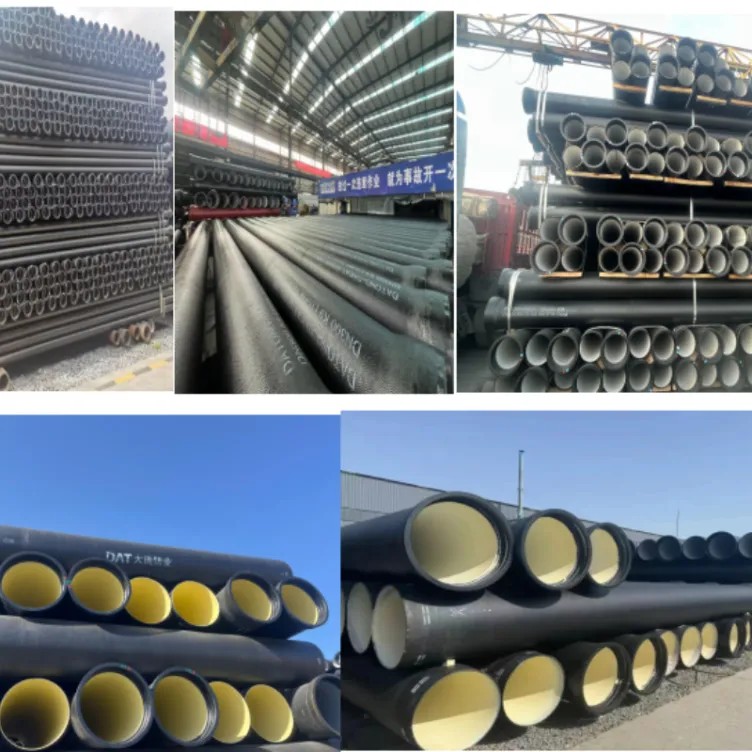
3. Coating: Metallic zinc spray with Bituminous Coating (Outside) Cement mortar lining (Inside). Epoxy coating available upon request.
4. Available joint method: T type; Self-anchor; Flange
5. Material: Ductile Iron
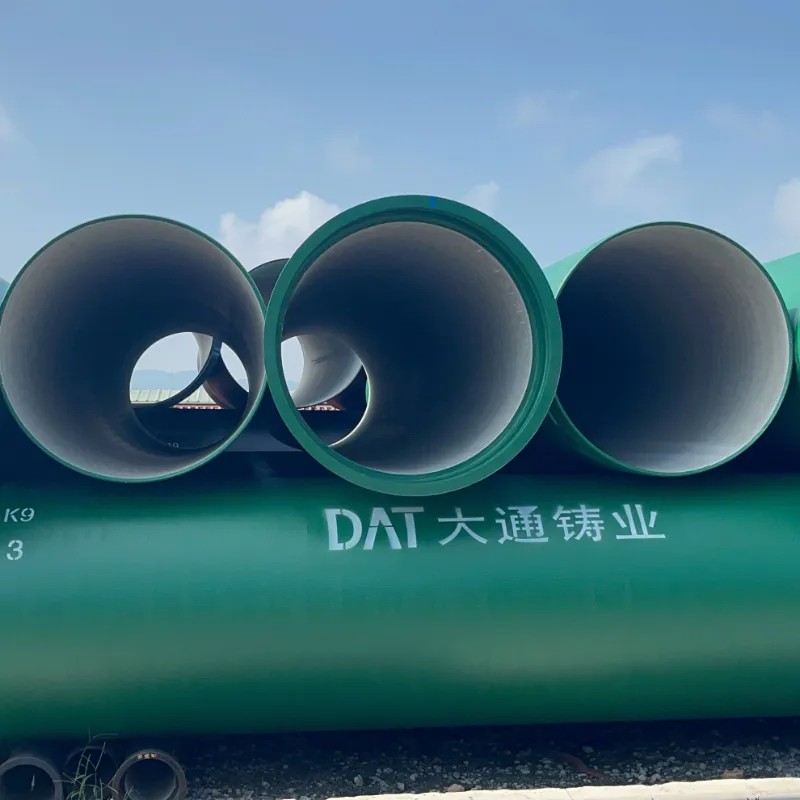
Product ranging from: 80mm- 2600mm Ductile Iron Pipe Erternal Paint with EpoxyColors: Red, Blue, Green or as request
1. The standard of pipe: ISO 2531, EN545 , EN598.
2. Pipe class: K9, C40, C30, C25, etc.
3. Pipe joint: push-on joint(Tyton joint), , self-restrained joint
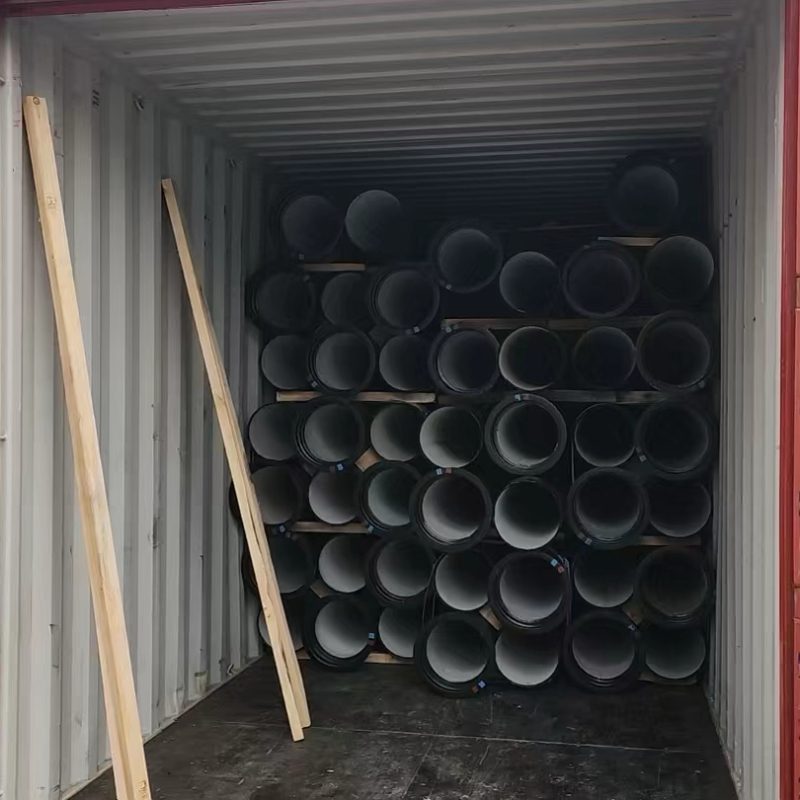
4. Effective length: in general, the pipe length is 6m for bulk shipment and 5.7m for container shipment.
5. Internal lining: cement mortar lining as per ISO4179
6. Zinc coating: at least 130g/m2 as per ISO 8179
7. Bitumen painting: at least 70um as per ISO 8179
8. Gaskets are NBR , SBR or EPDM rubber ring as per ISO4633 Ductile Iron Pipe K9K9 Ductile Iron Pipe is one of the most widely used pipe grades in modern water supply, drainage, and municipal infrastructure projects. Known for its high pressure resistance, long service life, and excellent mechanical strength, K9 grade ductile iron pipes have become a preferred choice for engineers, contractors, and government procurement agencies worldwide.
This article provides a comprehensive, engineering-oriented overview of K9 ductile iron pipes, covering standards, pressure ratings, applications, advantages, coatings, joint types, and key procurement considerations.
Navigation
Send Us A Message

First class quality service and professional after-sales team.
Get in Touch
*We respect your confidentiality and all information are protected.