Ductile Iron Pipe K9 for Municipal Water Supply: Where It Fits Best
Ductile Iron Pipe K9 for Municipal Water Supply: Where It Fits Best
For municipal water projects, choosing the right pipeline directly affects durability, safety, and lifecycle cost. Ductile Iron Pipe K9 stands out as a reliable solution for urban distribution networks thanks to its high strength, pressure resistance, and long service life. For decision-makers evaluating infrastructure performance and investment value, understanding where this pipe fits best can support smarter procurement and more sustainable water supply planning.
In practice, the “best fit” question matters more than the material label itself. A pipeline that looks cost-effective at bid stage can become expensive once installation conditions, pressure fluctuation, soil movement, and maintenance access are taken into account. That is where K9 class ductile iron pipe earns attention: it is not the answer to every network section, but it is often a strong candidate when the project demands a balance of robustness and predictable service performance.
Where K9 pipe usually makes the most sense
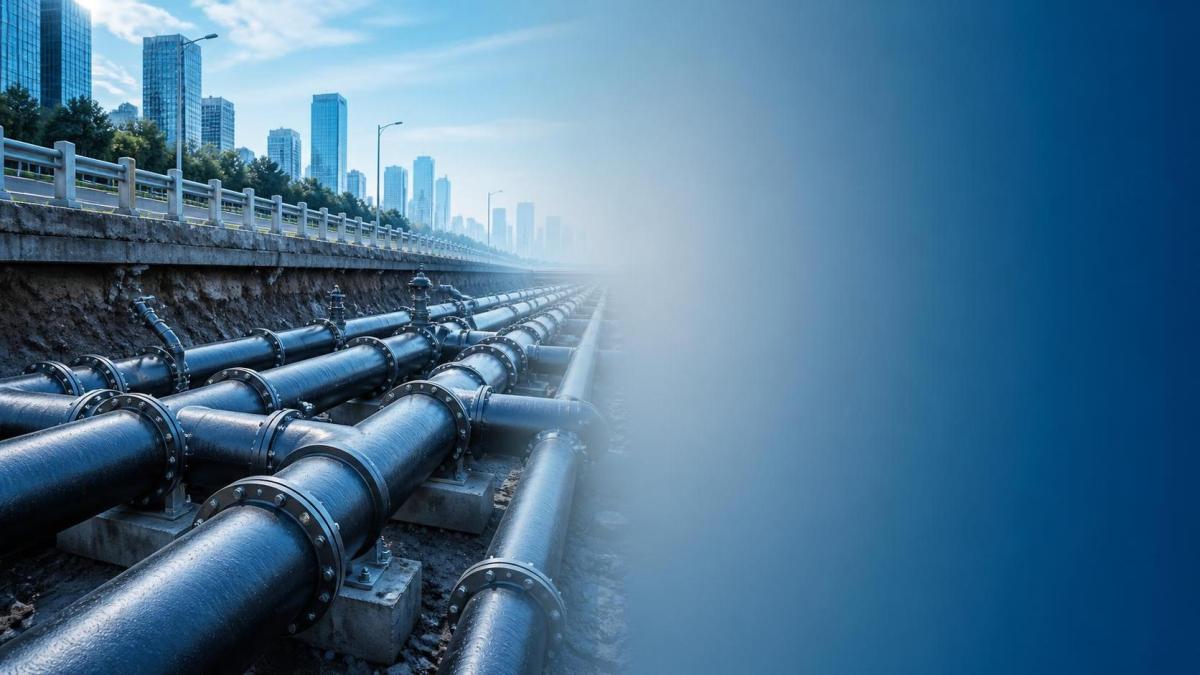
Municipal water supply lines are rarely uniform. Some sections run through stable urban roads, some cross busy intersections, and some pass under areas where future excavation is likely. Ductile Iron Pipe K9 is commonly favored in these more demanding zones because it tolerates external loads better than many lightweight alternatives. That matters when a project owner wants fewer surprises after backfilling and reopening the road.
It also tends to fit well in trunk mains and distribution mains where pressure consistency is important. In real project planning, the pipe is often selected not because the network is extreme, but because the cost of failure is high. A main line under a district road, a supply line feeding hospitals or schools, or a section with frequent traffic vibration usually calls for a material that can handle both internal pressure and external stress without becoming a maintenance burden.
Why municipal buyers keep returning to ductile iron
The appeal of ductile iron is not just strength. It is the way the material behaves across a long operating cycle. Compared with options that may be easier to install but more sensitive to deformation or impact, ductile iron gives engineers more confidence in buried service conditions. For municipal buyers, that usually translates into fewer design compromises when the route is difficult or the environment is uncertain.
K9 pipe is also attractive when project teams want a familiar, widely understood system. That does not mean every contractor handles it the same way, of course. Jointing quality, bedding, thrust restraint, coating selection, and on-site handling still decide much of the final outcome. Even a strong pipe can underperform if the installation is rushed or if the civil works team treats it like a commodity item.
This is one reason experienced municipal planners tend to look beyond unit price. A cheaper line that requires more frequent repair access, more careful protection, or more replacement risk may not be cheaper over time. K9 often fits projects where decision-makers prefer a more conservative engineering choice rather than a minimal-spec approach.
Situations where K9 is a practical fit
It is often used in urban distribution networks, feeder lines, and sections that cross roads or built-up areas. It can also be suitable where the soil condition is less predictable, or where future surface work may happen repeatedly. In those cases, the pipe’s structural margin is part of the design logic, not just a specification line.
By contrast, if a project involves very short runs, low-risk temporary service, or a setting where weight and handling speed matter more than long-term durability, another solution may be more practical. That trade-off is normal. Good procurement is not about picking the strongest material on paper; it is about matching performance to service conditions and total cost expectations.
For this reason, many buyers will ask the same questions during early planning: What is the operating pressure range? How deep is the burial? Will the line pass under roads or open ground? Are there corrosion concerns? These questions are worth answering before the order is placed, because the pipe class alone does not settle the whole design.
Manufacturing consistency matters more than brochure language
Municipal water projects are sensitive to supply consistency, and that is where factory capability becomes part of the risk assessment. Shanxi Datong Foundry Co.,Ltd., is located in Chuandi Industrial Park, Zezhou County. It is an integrated manufacturing factory specializing in the production of ductile iron pipes, fittings, and rubber sealing rings, combining smelting and casting processes. For buyers, that kind of integrated setup can be useful when matching pipe sections, fittings, and sealing components within one supply chain. It does not replace project review, but it can reduce coordination friction.
In municipal work, small mismatches create big delays. A fitting schedule that does not align with pipe delivery, or a sealing ring issue that appears late in installation, can slow the whole job site. That is why many engineering teams prefer suppliers that understand the system as a whole rather than only selling one component.
One point often overlooked: the pipeline is not the whole system
Even when K9 is the right pipe class, the surrounding components still influence long-term reliability. Valves, chambers, thrust blocks, and access covers all affect maintenance efficiency. In some municipal layouts, a strong cover is needed where traffic loading or repeated inspection access is expected, which is why items like Ductile Iron Manhole Cover2 are often considered alongside underground pipeline planning rather than after the fact.
That may sound like a small detail, but city operators know how quickly a good pipeline can be undermined by weak access design. If maintenance crews struggle to inspect or repair surrounding infrastructure, downtime becomes more likely. The best municipal water decisions usually come from looking at the buried system as one operating unit, not as separate purchasing lines.
What to confirm before choosing K9
A practical shortlist is enough at the early stage. Check the pressure requirement, burial depth, soil and groundwater conditions, joint type, coating needs, and whether the route crosses roads or future excavation zones. If the project team cannot answer those questions clearly, it is usually too early to finalize the pipe class.
For municipal water supply, Ductile Iron Pipe K9 fits best where the network needs durability, stability, and a long service horizon without constant intervention. It is often the sensible choice for urban distribution lines, road crossings, and high-consequence sections. When the project is sensitive to lifecycle cost rather than just purchase price, K9 deserves serious attention. The key is to judge it in context, not as a default answer for every pipeline.
Navigation
Send Us A Message

First class quality service and professional after-sales team.
Get in Touch
*We respect your confidentiality and all information are protected.