Corrosive soils can threaten the long-term performance of Ductile Iron Pipe for Water Supply, making external protection a critical part of pipeline design and technical evaluation.
The right protection system depends on route conditions, installation quality, and electrical exposure. No single soil measurement or coating choice establishes adequate protection for every location.
Technical evaluators should assess soil resistivity, moisture, chlorides, sulfates, and stray currents together, then select measures that address the actual corrosion mechanisms along the proposed route.
Polyethylene encasement, suitable external coatings, and cathodic protection where warranted can support durable installations. Their value depends on clear specifications, compatible components, and verifiable construction practices.
A defensible evaluation therefore connects site investigation with protection selection, installation acceptance, and maintenance requirements. This approach supports reliable water delivery while controlling avoidable lifecycle costs.
Which soil conditions justify additional corrosion protection?
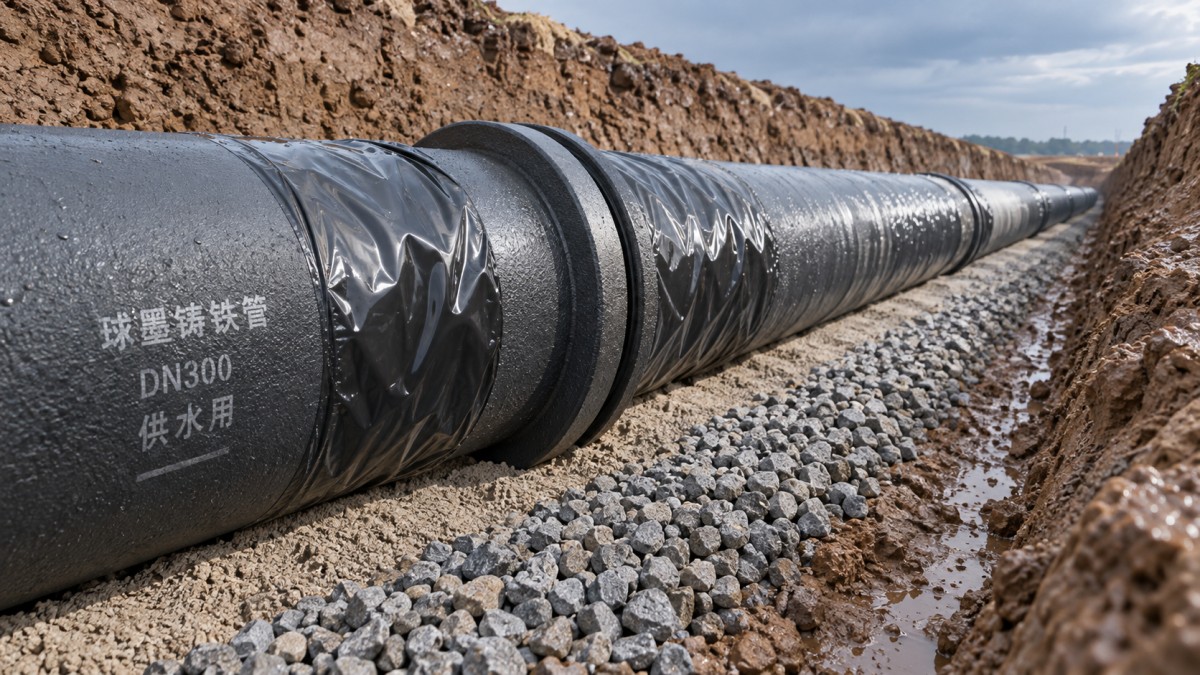
Begin with a route-based investigation rather than a single sample. Soil conditions can change sharply near drainage channels, reclaimed land, industrial sites, and imported backfill zones.
Measure soil resistivity using appropriate field or laboratory methods, recording moisture conditions and sampling depth. Low resistivity indicates easier electrical current flow but does not predict corrosion alone.
Include pH, redox potential, sulfides, moisture, and groundwater conditions in the assessment. Chlorides and sulfates provide additional context, especially where saline groundwater or industrial contamination occurs.
High sulfate content alone does not establish microbiologically influenced corrosion. Interpretation should consider oxygen availability, sulfides, organic material, and other evidence of conditions supporting microbial activity.
Investigate seasonal wetting and drying, poorly drained trenches, and transitions between different soils. These conditions can create differential aeration cells and localized attack on exposed iron.
Check for nearby direct-current transit systems, industrial electrical installations, and other cathodically protected structures. Stray-current exposure requires specialist assessment because ordinary soil classification may overlook it.
For applicable projects, use the soil evaluation framework associated with ANSI/AWWA C105/A21.5. Confirm the specified edition and local utility requirements before applying its recommendations to design.
When is polyethylene encasement a suitable choice?
Polyethylene encasement is a widely used external protection method for ductile iron pipelines in aggressive soils. It limits direct contact with soil and reduces environmental variability.
It is a loose encasement system, rather than a bonded waterproof coating. Some moisture can enter, so performance depends on correct wrapping and minimizing damage.
Evaluate encasement materials, thickness, dimensions, and installation procedures against the applicable standard. Specify treatment of pipe barrels, joints, fittings, valves, and service connections before construction begins.
Installation should keep the film close to the pipe, with excess material folded appropriately. Secure overlaps and ends according to the specified procedure without overstretching.
Repair tears and punctures using approved materials before backfilling. Pay particular attention to sling contact, joint assembly, tapping operations, and sharp objects within the trench.
Where stray currents or unusually severe exposure are present, obtain a corrosion specialist’s assessment. Encasement selection should reflect those conditions and the utility’s documented operating experience.
How should evaluators compare external coating systems?
Distinguish a standard finishing layer from a specified corrosion protection system. A thin cosmetic coating should not be credited with performance it was never designed to provide.
Depending on regional standards and project requirements, options may include zinc-based systems, protective finishing layers, or bonded dielectric coatings. Compare complete systems, including preparation and repairs.
Request evidence for the proposed exposure conditions, including adhesion, impact resistance, handling durability, and compatibility with encasement where combined protection is specified for the pipeline route.
Define surface preparation, application conditions, coating thickness, curing requirements, and inspection methods. Factory quality records should identify the supplied system and demonstrate compliance with project acceptance criteria.
For industrial grinding tasks, Use all-in-one machine offers efficient grinding and consistent results; its suitability for pipe surface preparation requires separate validation against coating requirements.
Specify how coating damage at transport contact points, joints, and field modifications will be repaired. Use manufacturer-approved procedures and verify compatibility before accepting repaired components.
Where holiday testing applies to a dielectric coating, specify the method and voltage appropriate to that system. Do not assume every external finish requires identical testing.
When does cathodic protection require specialist design?
Cathodic protection can be appropriate where assessment identifies severe exposure, electrical interference, or project-specific requirements. Its design must account for the pipeline’s electrical behavior and surrounding infrastructure.
Rubber-gasketed joints do not provide dependable electrical continuity. A protection design may therefore require deliberate bonding, isolation, test stations, and provisions for monitoring individual pipeline sections.
A specialist should determine whether sacrificial anodes or impressed current suit the installation. Selection depends on current demand, soil conditions, coating characteristics, and operational monitoring capability.
Assess interaction with nearby metallic utilities and existing protection systems. Poorly coordinated designs can create interference, transferring corrosion risk to another structure or pipeline section.
Specify commissioning measurements, applicable acceptance criteria, and inspection intervals. Avoid applying generic potential thresholds without considering ductile iron, the selected protection system, and measurement conditions.
If polyethylene encasement and cathodic protection are proposed together, require an integrated design. Current distribution and monitoring effectiveness need evaluation rather than assumptions about combined performance.
What should the purchase specification actually require?
Translate the corrosion assessment into requirements for each route segment. State the protection system, relevant standards, inspection responsibilities, repair procedures, and records required before acceptance.
Keep external corrosion protection distinct from internal water-contact requirements. Internal linings and sealing materials must separately meet the project’s drinking-water approval and service compatibility requirements.
Shanxi Datong Foundry Co., Ltd., located in Chuandi Industrial Park, Zezhou County, manufactures ductile iron pipes, fittings, and rubber sealing rings through integrated smelting and casting processes.
When evaluating this supplier, request project-specific documentation for dimensions, mechanical properties, joints, lining, and external protection. Manufacturing scope alone does not establish compliance with every project requirement.
Ask suppliers to identify protection coverage around fittings and accessories, including field assembly details. These interfaces deserve attention because incomplete coverage can undermine otherwise suitable barrel protection.
Require traceability between delivered components, inspection records, and approved specifications. Resolve substitutions before installation, particularly where alternative coatings, encasement materials, or repair products are proposed onsite.
Which construction checks most affect long-term performance?
Inspect deliveries for coating damage, film defects, and handling problems before lowering pipe into the trench. Record deficiencies and complete approved repairs while access remains straightforward.
Verify bedding and initial backfill against the design. Remove debris and control sharp particles that could damage protection during placement, compaction, or subsequent pipe movement.
Inspect joints, fittings, restraints, and service connections before covering them. Confirm that wrapping, coating repairs, and electrical connections match the approved drawings and installation procedures.
Establish inspection hold points before backfilling critical sections. Photographs, repair records, and location references provide useful evidence when future maintenance teams investigate a localized pipeline problem.
Pressure testing confirms hydraulic integrity at commissioning; it does not demonstrate adequate external corrosion protection. Acceptance should include the separate inspections required for the selected system.
How should the final protection decision be made?
Compare options using installed cost, inspection effort, expected maintenance, and consequences of failure. Include excavation, service interruption, road reinstatement, and access constraints in the economic assessment.
A higher initial protection cost may be justified at critical crossings or difficult repair locations. Apply stronger measures where evidence and failure consequences support the investment.
Avoid promising a fixed service life from a coating name or soil score alone. Durability depends on exposure, design assumptions, construction quality, and continuing operational conditions.
The strongest specification for Ductile Iron Pipe for Water Supply links documented corrosion risks to measurable protection requirements, then verifies those requirements during procurement and installation.
Select encasement, coatings, and specialist electrical protection according to site evidence. That decision gives technical evaluators a practical basis for approval, lifecycle planning, and reliable service.