Does a quoted K9 ductile iron pipe price include joint gaskets?
A quoted K9 Ductile Iron Pipe Price does not automatically include joint gaskets. Some suppliers include standard sealing rings in the pipe unit price; others quote them separately or supply them only when requested. The reliable answer is the written quotation scope, including the gasket type, quantity, and any exclusions.
When comparing offers for a pipeline order, a lower pipe price can look attractive until rubber rings appear as an additional charge. Missing or incompatible gaskets can also leave delivered pipes unavailable for installation. Before approving the purchase, confirm both whether the rings are included commercially and whether they match the specified joints.
K9 identifies the pipe class, not the supply package
K9 is a wall-thickness classification used in certain ductile iron pipe specifications. It does not define which accessories a supplier must include. Nor should it be treated, by itself, as a complete pressure rating or joint specification. The applicable pipe standard, diameter, joint design, and service requirements still need to be stated.
A description such as “K9 ductile iron pipe, socket and spigot” identifies important pipe characteristics, but it does not settle the gasket question. Even when a sealing ring is necessary to assemble the joint, that technical necessity does not establish whether its cost is included in the quoted pipe price.
Look for a separate accessories statement, bill of quantities, or quotation note. Wording such as “complete with compatible rubber gaskets” is useful, but it should be supported by defined quantities and specifications. “Accessories available” means availability, not inclusion.
Read the quotation as a supply scope
The following wording can help identify where clarification is needed. These are possible quotation descriptions, not universal supplier terms.
Also check the pricing unit. A quotation per metre, per pipe, or per tonne can obscure the accessory allowance unless the supplier states it separately. Convert competing offers to the same supply quantity and commercial basis before comparing them. A verbal assurance should be carried into the revised quotation or order acknowledgment.
An included gasket still needs a compatibility check
“Rubber gasket included” is not enough to confirm installation readiness. A ring must fit the actual socket profile and joint system. Matching nominal diameter alone does not establish interchangeability between different joint designs.
Request the gasket identification or drawing reference alongside the pipe joint details. For proprietary or restrained joints, establish which sealing and restraint components are required; a conventional push-on gasket should not be assumed to satisfy the entire joint assembly.
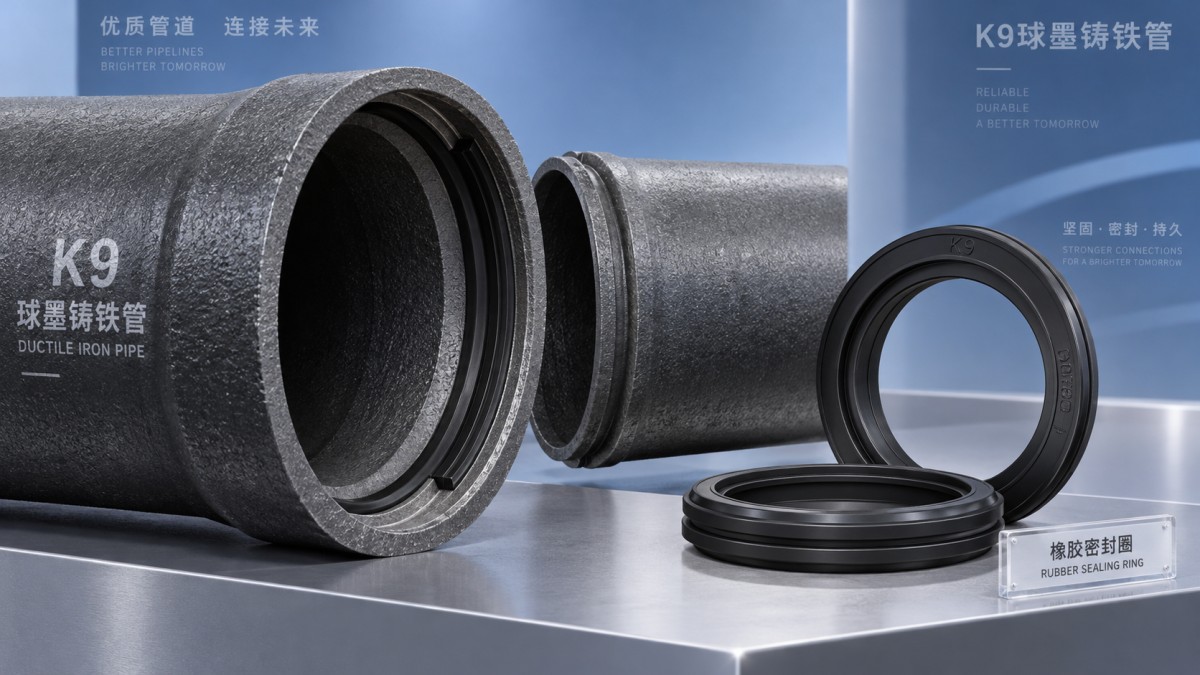
The material must also suit the conveyed fluid and operating conditions. EPDM and NBR are examples of elastomers used in sealing applications, but neither should be selected solely because it is offered as the supplier’s default. Obtain the specified compound and confirm suitability for the actual fluid, temperature, and project requirements. For drinking-water service, request the documentation required by the project and applicable jurisdiction rather than assuming that every rubber ring is suitable.
A product listing such as Rubber Ring4 can provide a reference when asking about separately supplied rings. However, the product name and category alone do not establish dimensions, material, approvals, or compatibility. Those details must be confirmed against the selected pipe joint before the item is added to the order.
Count joints, not just pipe lengths
For many conventional push-on arrangements, one gasket is required for each assembled socket joint. That does not make “one ring per pipe” a universally correct purchasing rule. The required quantity depends on the pipeline layout, supplied socket ends, fittings, and connection details.
Use the joint schedule or installation drawings to establish the quantity by diameter and joint type. Separate the following requirements:
- Pipe socket joints: Count the connections that will actually be assembled using the specified sealing rings.
- Fitting sockets: Confirm whether their rings are included with the fittings or must be purchased separately.
- Other connections: Flanges, mechanical joints, couplings, and restrained assemblies may require different gaskets or additional components.
- Installation spares: Agree a separate allowance rather than assuming extra rings are included.
Check for double counting when pipe and fitting quotations both contain accessory allowances. Equally, avoid leaving fitting gaskets unbudgeted because the pipe supplier has included rings only for pipe sockets. The final order should identify gasket quantities by size and joint reference, not just a single total for “rubber rings.”
Compare the complete delivered supply cost
A fair comparison keeps the required technical scope constant. An offer with included rings and an offer with separately priced rings can both be acceptable, provided the totals cover the same usable supply.
Compare: pipe cost + required gasket cost + agreed spares + other required joint components + applicable packing, freight, taxes, and duties. Apply the same delivery terms and destination to each offer, and avoid adding charges already included in a supplier’s total.
Separate gasket pricing can be useful when different diameters, compounds, or joint systems are involved. It makes accessory costs visible and allows quantities to be checked. Bundled pricing reduces line items, but it still needs a detailed scope so that inclusion does not conceal an unspecified material or missing size.
Also establish whether rings will travel with the pipes or in a separate shipment. Separate delivery can introduce handling costs and scheduling risk even where the gasket purchase price is included. Confirm packing identification and dispatch timing so that receiving staff can reconcile the rings with the corresponding pipe sizes.
Put the clarification into the purchase order
Rather than asking only “Are gaskets included?”, send a request that closes the commercial and technical gaps together:
“Please confirm whether the quoted pipe unit prices include joint sealing rings. State the included quantity by diameter, gasket material, compatible joint reference, and applicable documentation. Identify any separately charged rings, spare quantities, fitting gaskets, or other joint components. Please confirm packing arrangements and whether all required rings will be dispatched with the corresponding pipes.”
Use the supplier’s response to revise the purchase order. Where rings are included, state their specification and quantities explicitly. Where they are separate, include a priced line tied to the relevant pipe or fitting joints. Do not leave an unresolved accessory requirement in an email while the order itself says only “K9 pipes.”
At receipt, reconcile the packing list against that agreed schedule and inspect ring identification and condition before releasing materials for installation. If substitutions have been supplied, hold the affected items until compatibility and project acceptance are confirmed. The purchasing decision is complete only when the order defines both the price boundary and the sealing components needed to assemble the specified joints.
Navigation
Send Us A Message

First class quality service and professional after-sales team.
Get in Touch
*We respect your confidentiality and all information are protected.